The audio for this story is currently not available.
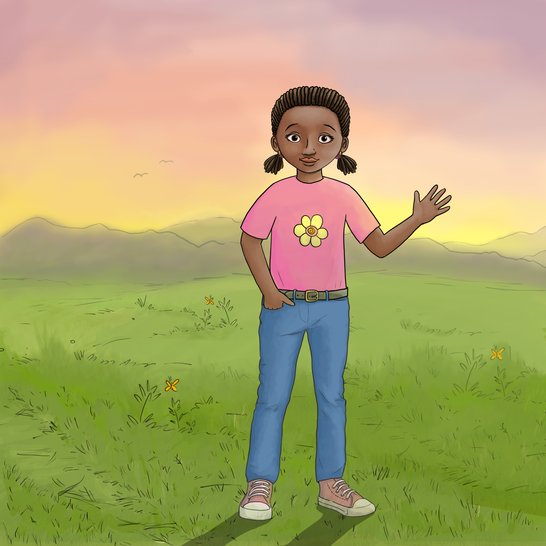
Enwa ke Khalai. O na le dilemo tse supa. Lebitso la hae le bolela ‘ya lokileng’ ka puo ya habo ya Lubusuku.
This is Khalai. She is seven years old. Her name means ‘the good one’ in her language, Lubukusu.
Voici Khalai. Elle a sept ans. Son nom signifie « celle qui est bonne » dans sa langue, le lubukusu.
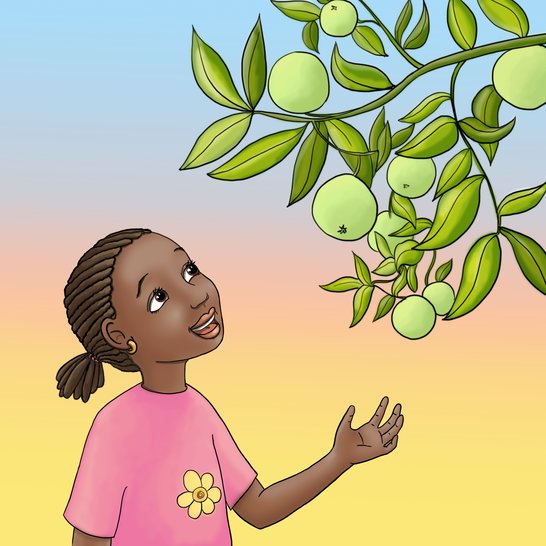
Khalai o a tsoha a bue le sefate sa dilamunu. ” Sefate sa dilamunu ke kopa o hole hle! Hola o re fe dilamunu tse ngata tse butswitseng.”
Khalai wakes up and talks to the orange tree. “Please orange tree, grow big and give us lots of ripe oranges.”
Khalai se réveille et parle à l’oranger. « S’il-te-plait oranger, grandis et donne-nous beaucoup d’oranges mûres. »
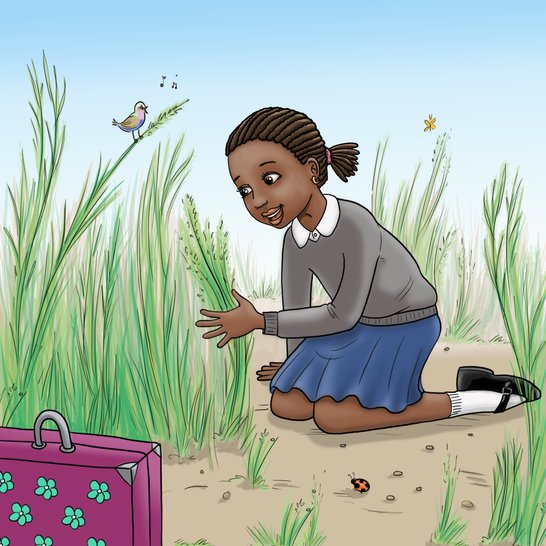
Khalai o ya sekolong ka maoto. Tseleng o bua le jwang. “Jwang hola hle! Hola o be motalana mme o se ke wa omella.”
Khalai walks to school. On the way she talks to the grass. “Please grass, grow greener and don’t dry up.”
Khalai marche à l’école. En chemin, elle parle à l’herbe. « S’il-te-plait herbe, deviens plus verte et ne sèche pas. »
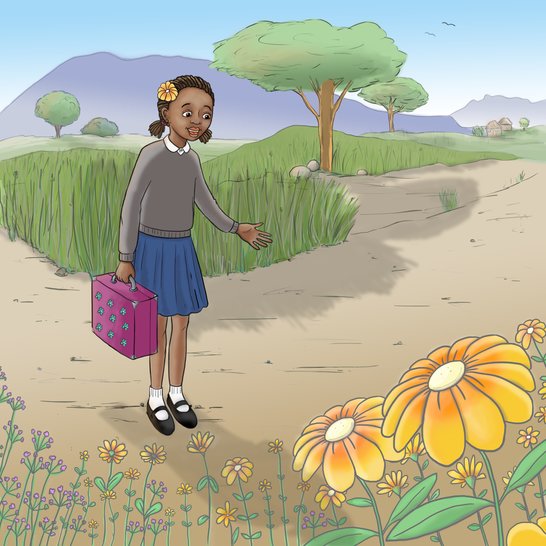
Khalai o feta pela dipalesa. “Dipalesa holang hle! Holang ke tle ke kgone ho le beha moriring wa ka.”
Khalai passes wild flowers. “Please flowers, keep blooming so I can put you in my hair.”
Khalai passe vers des fleurs sauvages. « S’il-vous-plait fleurs, continuez à fleurir pour que je puisse vous porter dans mes cheveux. »
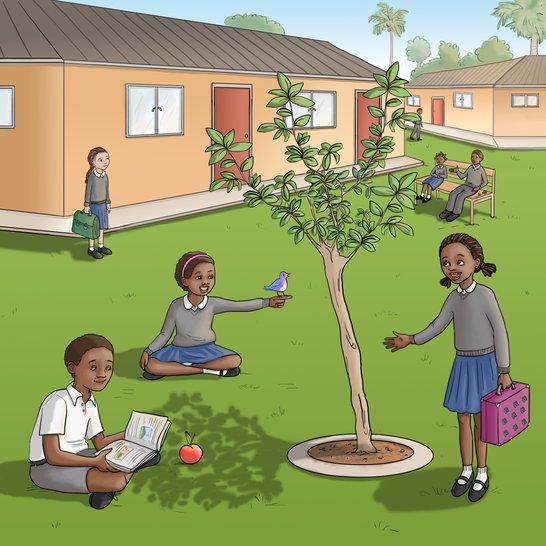
Sekolong Khalai o bua le sefate se mahareng a jarete. Sefate ntsha makala a maholo, hore re tle re bale ka tlasa moriti wa hao hle!
At school, Khalai talks to the tree in the middle of the compound. “Please tree, put out big branches so we can read under your shade.”
À l’école, Khalai parle à l’arbre au centre du camp. « S’il-te-plait arbre, fais pousser de grandes branches pour que nous puissions lire sous ton ombre. »
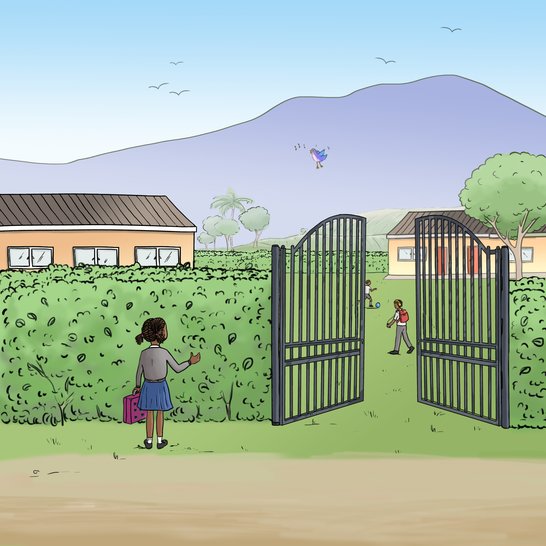
Khalai o bua le dihlahlana tse potapotileng sekolo. Dihlahlana holang hle! Holang le be matla mme le thibele dikweta hore di se ke tsa kena sekolong sa heso.
Khalai talks to the hedge around her school. “Please grow strong and stop bad people from coming in.”
Khalai parle à la haie qui entoure son école. « S’il-te-plait, deviens robuste et empêche les personnes méchantes d’entrer. »
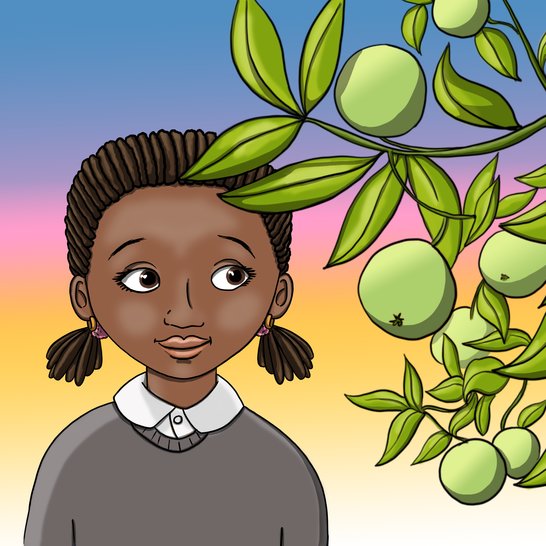
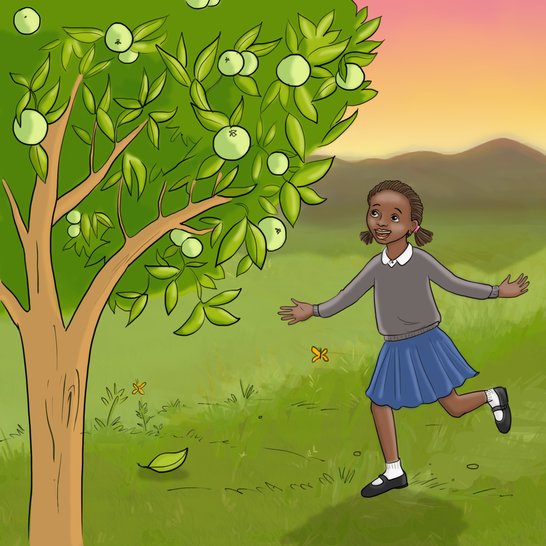
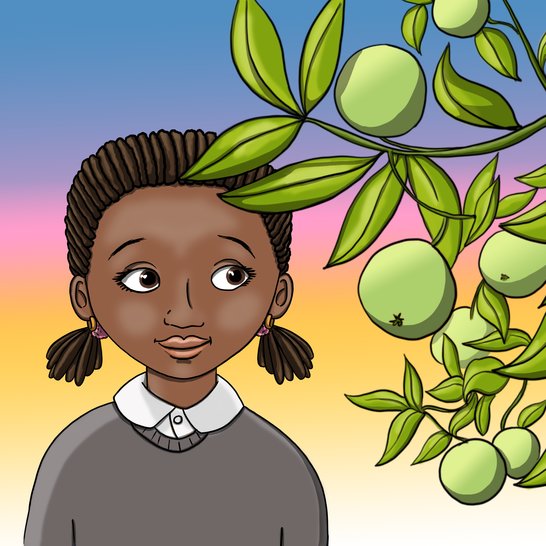
Ha Khalai a kgutla sekolong, o tjhakela sefate sa dilamunu. “Na dilamunu tsa hao di se di butswitse?” Khalai o a botsa.
When Khalai returns home from school, she visits the orange tree. “Are your oranges ripe yet?” asks Khalai.
Quand Khalai retourne chez elle de l’école, elle visite l’oranger. « Est-ce que tes oranges sont mûres ? » demande Khalai.
“Dilamunu di ntse di le tala,” Khalai o hemela hodimo. “Ke tla o bona hosane.” Ho rialo Khalai. “Mohlomong o tla mpha lamunu e butswitseng.”
“The oranges are still green,” sighs Khalai. “I will see you tomorrow orange tree,” says Khalai. “Perhaps then you will have a ripe orange for me!”
« Les oranges sont encore vertes, » soupire Khalai. « Je te verrai demain oranger, » dit Khalai. « Peut-être que demain tu auras une orange mûre pour moi ! »