The audio for this story is currently not available.
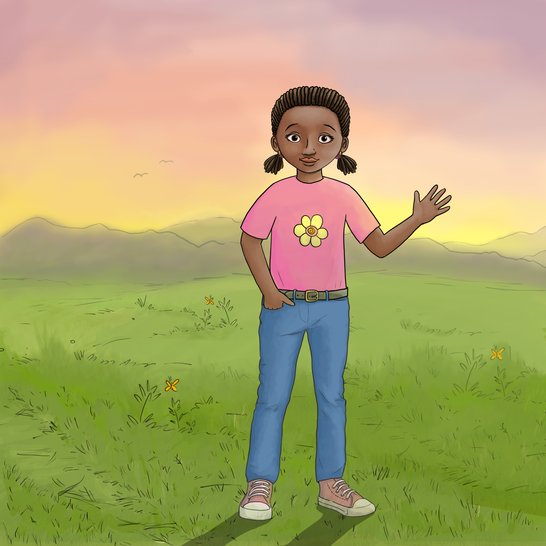
Uyu ni Khalai. Ali na imyaka cine-lubali. Ishina lyakwe mu lulimi lwakwe, ulwa Cilubukusu lipilibula “umusuma”.
This is Khalai. She is seven years old. Her name means ‘the good one’ in her language, Lubukusu.
Voici Khalai. Elle a sept ans. Son nom signifie « celle qui est bonne » dans sa langue, le lubukusu.
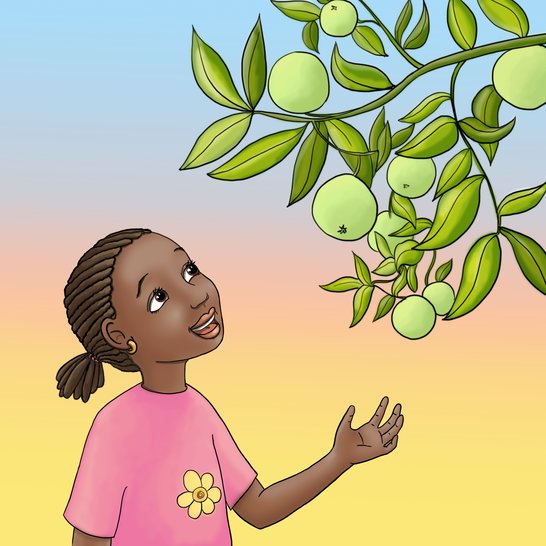
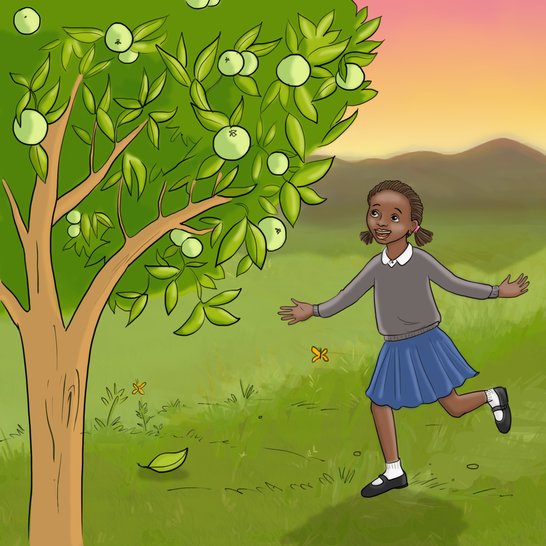
Lyonse Khalai nga ashibuka alasosha icimuti ca macungwa ati: “We cimuti ca macungwa, napaapaata kula, utwaale na macungwa ayaapya ayeengi.”
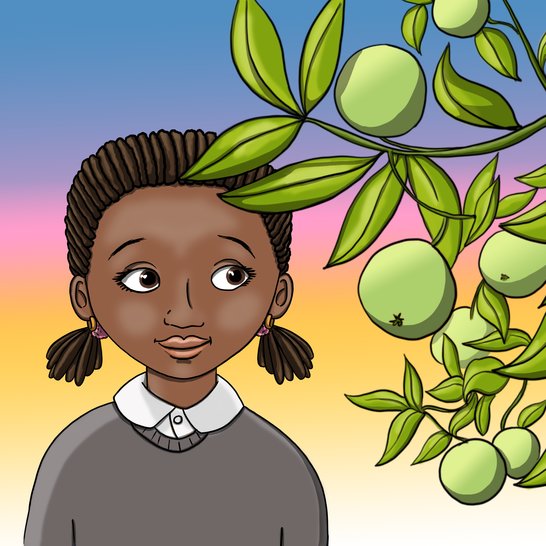
Khalai wakes up and talks to the orange tree. “Please orange tree, grow big and give us lots of ripe oranges.”
Khalai se réveille et parle à l’oranger. « S’il-te-plait oranger, grandis et donne-nous beaucoup d’oranges mûres. »
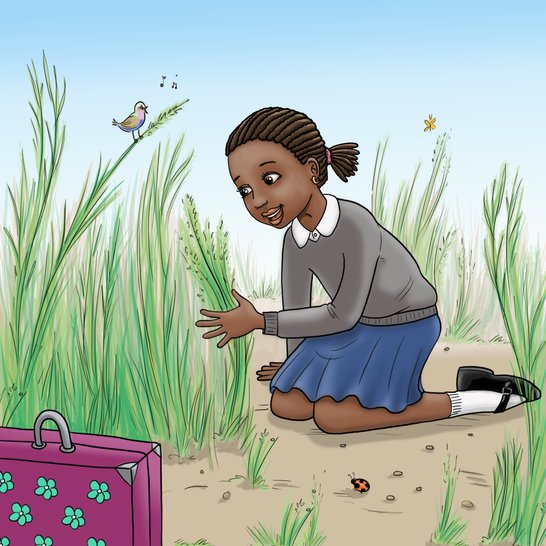
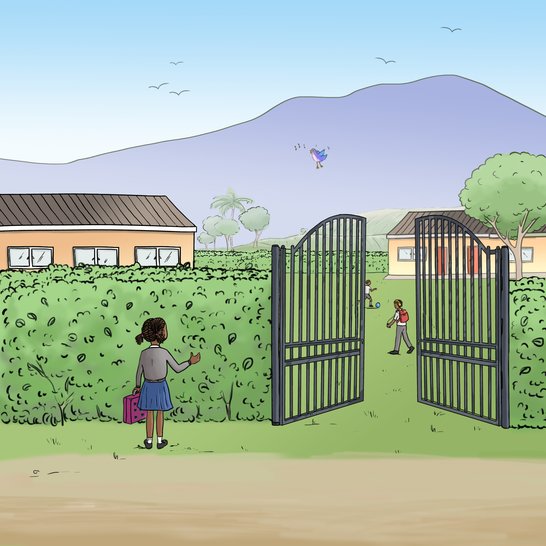
Khalai nga aleenda lyonse pa kuya ku sukuulu alasosha icaani ati: “We caani, napaapaata moneka uwayemba elyo kabili wilauma.”
Khalai walks to school. On the way she talks to the grass. “Please grass, grow greener and don’t dry up.”
Khalai marche à l’école. En chemin, elle parle à l’herbe. « S’il-te-plait herbe, deviens plus verte et ne sèche pas. »
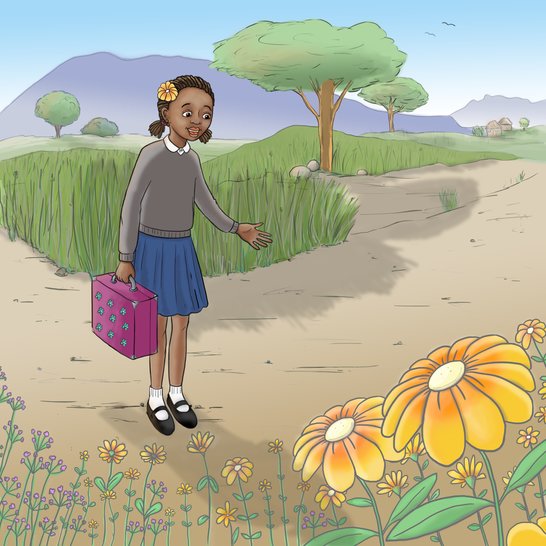
Khalai nga asaanga amaluba ya mpanga nayo alayeba ati: “Mwe maluba muleebalula bwino-bwino pakuti ndeswako no kubiika mu mushishi wandi.”
Khalai passes wild flowers. “Please flowers, keep blooming so I can put you in my hair.”
Khalai passe vers des fleurs sauvages. « S’il-vous-plait fleurs, continuez à fleurir pour que je puisse vous porter dans mes cheveux. »
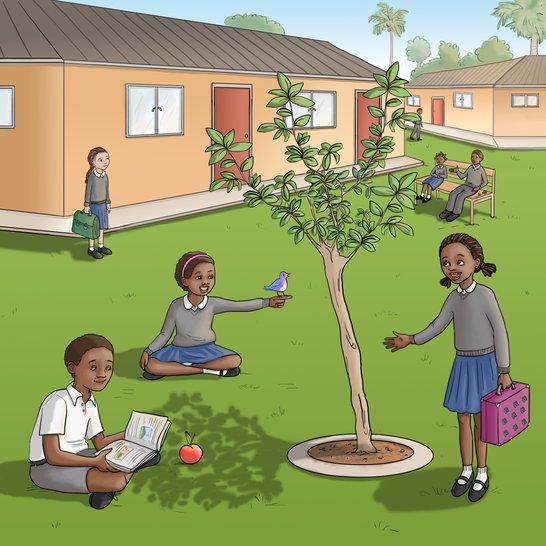
Khalai nga afika ku sukulu, lyonse alasosha icimuti icabeela pakati ka lubansa lwe sukulu ati: “We cimuti, napaapaata kula utwale ne misambo iyakutupeela icintelelwe icakuti tuleikalamo pa kubelenga.”
At school, Khalai talks to the tree in the middle of the compound. “Please tree, put out big branches so we can read under your shade.”
À l’école, Khalai parle à l’arbre au centre du camp. « S’il-te-plait arbre, fais pousser de grandes branches pour que nous puissions lire sous ton ombre. »
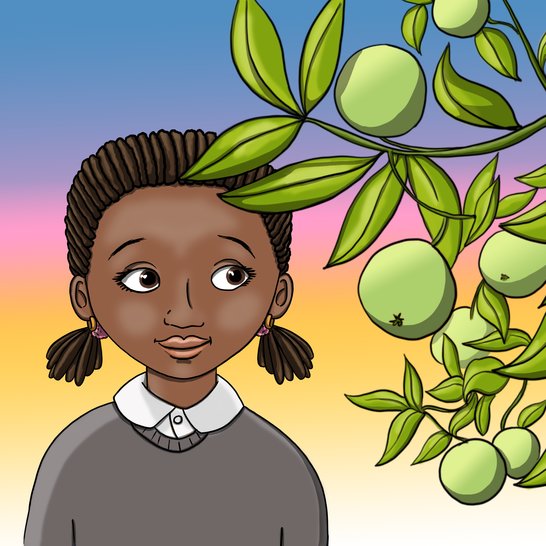
“The oranges are still green,” sighs Khalai. “I will see you tomorrow orange tree,” says Khalai. “Perhaps then you will have a ripe orange for me!”
« Les oranges sont encore vertes, » soupire Khalai. « Je te verrai demain oranger, » dit Khalai. « Peut-être que demain tu auras une orange mûre pour moi ! »
Written by: Ursula Nafula
Illustrated by: Jesse Pietersen
Translated by: Margaret Nambao, Agnes Chileshe Chibamba