The audio for this story is currently not available.
Sakima naapila ni bashemi bahae ni kezelaahae wa lilimo zene. Neba pila fa mubu wa muuna yanafumile. Ndu yabona ya bucwani neinzi kwa mafelelezo a mukoloko wa likota.
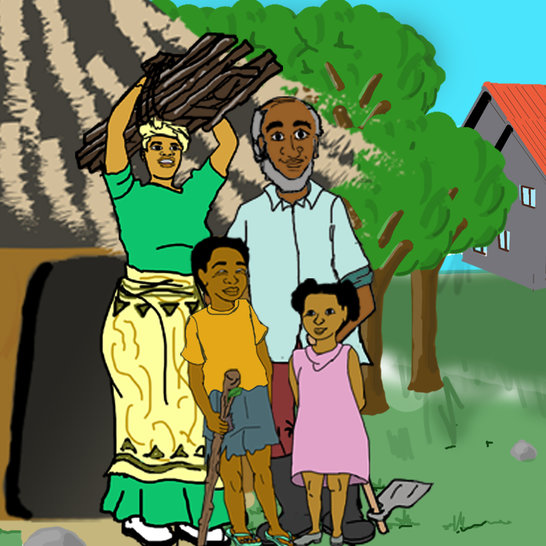
Sakima lived with his parents and his four year old sister.
They lived on a rich man’s land.
Their grass-thatched hut was at the end of a row of trees.
Sakima vivait avec ses parents et sa petite sœur, qui avait quatre ans. Ils vivaient sur la terre d’un homme riche. Leur hutte à toit de chaume était située au bout d’un rang d’arbres.
Sakima hananani lilimo zetalu, nakulile mi aba sibofu. Sakima neeli mucaha yana fuyozwi.
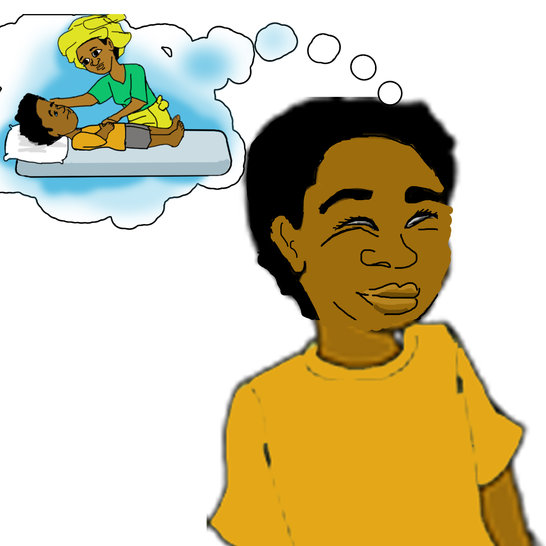
When Sakima was three years old, he fell sick and lost his sight.
Sakima was a talented boy.
Quand Sakima avait trois ans, il est tombé malade et a perdu la vue. Sakima était un garçon avec beaucoup de talent.
Sakima naezanga lika zeñata kufita litaka zahae za lilimo zesilezi. Kamutala, nainanga ni babahulu ba mwa munzi kuambola litaba zabutokwa.
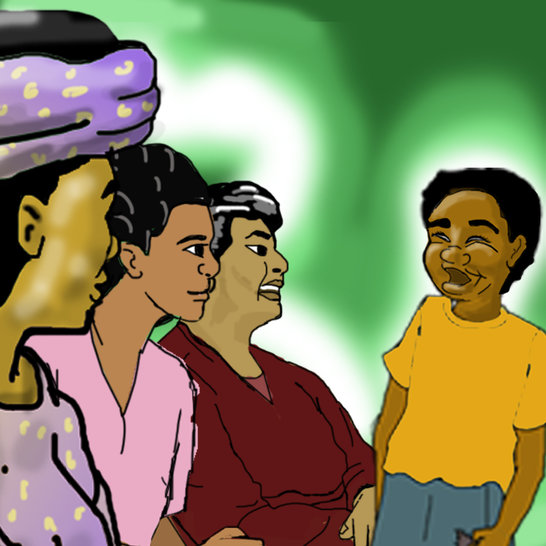
Sakima did many things that other six year old boys did not do.
For example, he could sit with older members of the village and discuss important matters.
Sakima faisait beaucoup de choses que d’autres garçons de six ans ne faisaient pas. Par exemple, il pouvait se tenir avec les membres plus âgés du village et discuter de questions importantes.
Bashemi bahae Sakima ne ba beleka kwa ndu ya muuna yoo yana fumile. Nebazwanga fandu kakusasani-sasani mi nikuyokutanga manzibwana luli. Sakima nasiyalanga ni kezela hae wa mwanana.
The parents of Sakima worked at the rich man’s house.
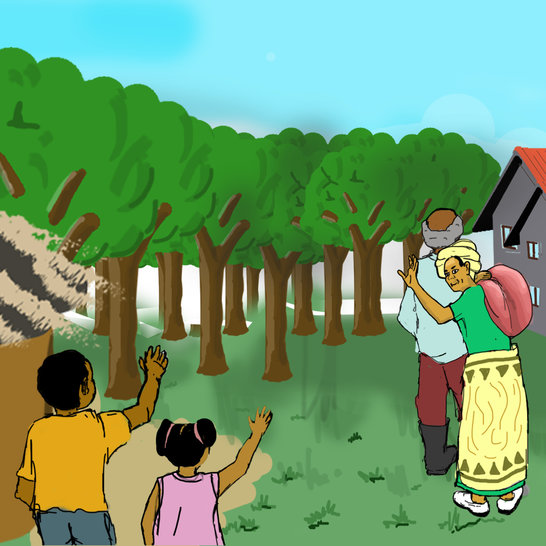
They left home early in the morning and returned late in the evening.
Sakima was left with his little sister.
Les parents de Sakima travaillaient chez l’homme riche. Ils quittaient leur maison tôt le matin et revenaient tard le soir. Sakima restait seul chez eux avec sa petite sœur.
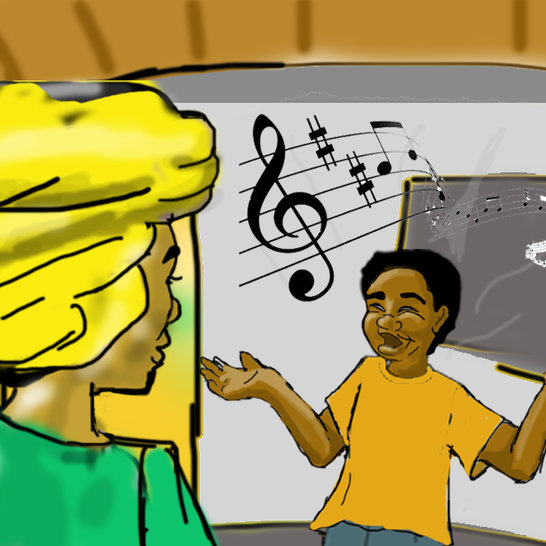
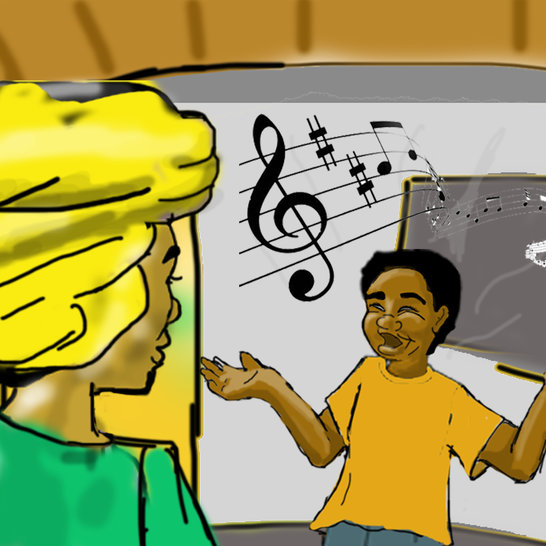
Sakima nalata kuopela lipina. Zazi leliñwi bo mahe se ba mubuza, “Kikakai koitutelanga lipina ze Sakima?”
Sakima loved to sing songs.
One day his mother asked him, “Where do you learn these songs from, Sakima?”
Sakima adorait chanter des chansons. Un jour sa mère lui demanda, « Où apprends-tu à chanter ces chansons, Sakima? »
Sakima alaba, “Litahanga feela ima. Niliutwanga mwa toho yaka mi kipeto naliopela.”
Sakima answered, “They just come, mother. I hear them in my head and then I sing.”
Sakima répondit, « Elles me viennent tout simplement, maman. Je les entends dans ma tête et ensuite je chante. »
Sakima na latanga ku opelela kezelaahae wa mwanana sihulu hautwa tala. Kezelaahae na teelezanga kuyena anze aopela pina yanalata hahulu. Nanyungwa maikuto kabakala minembo ye ombaomba.
Sakima liked to sing for his little sister, especially, if she felt hungry.
His sister would listen to him singing his favourite song.
She would sway to the soothing tune.
Sakima aimait chanter pour sa petite sœur, surtout si elle avait faim. Sa sœur l’écoutait chanter sa chanson préférée. Elle se balançait en écoutant la chanson apaisante.
“Kutela kuopela hape, Sakima,” kezelaahae namukupanga. Sakima na lumelanga mi nakona kukutela kuopela hañata-ñata.
“Can you sing it again and again, Sakima,” his sister would beg him.
Sakima would accept and sing it over and over again.
« Peux-tu la chanter encore et encore, Sakima? » le suppliait sa sœur. Sakima acceptait et la chantait encore et encore.
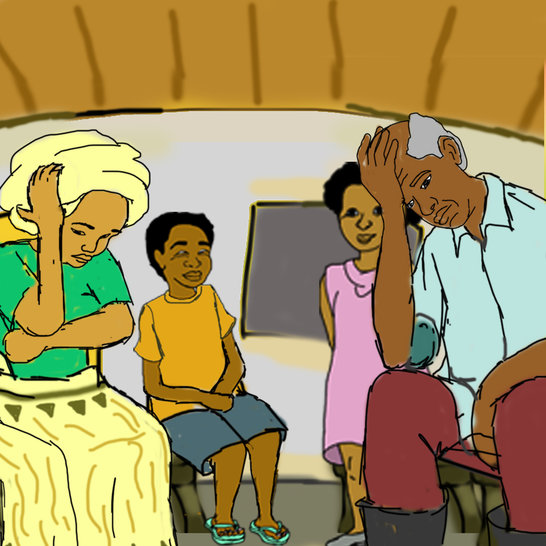
One evening when his parents returned home, they were very quiet.
Sakima knew that there was something wrong.
Un soir quand ses parents sont revenus chez eux, ils étaient très tranquilles. Sakima savait qu’il y avait un problème.
Butata kibufi, boma, bo ndate? Sakima abuza. Sakima alemuha kuli mwanaa mufumi wa mushimani na tondahalile. Mi ndatahe na lobehile hahulu pilu ni kuikutwa bulutu.
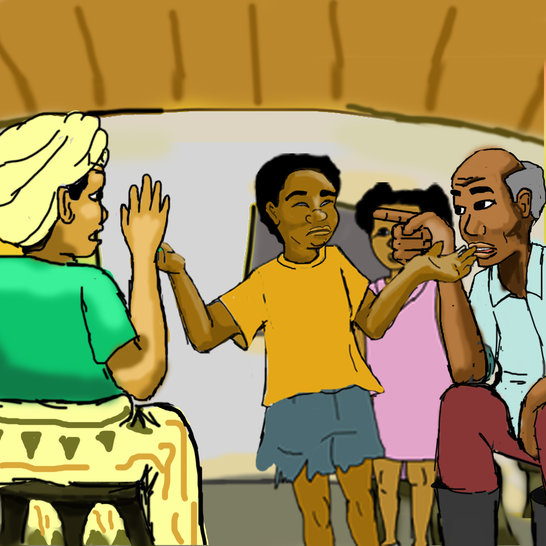
“What is wrong, mother, father?” Sakima asked.
Sakima learned that the rich man’s son was missing.
The man was very sad and lonely.
« Qu’est-ce qu’il y a, maman et papa? » Sakima demanda. Sakima apprit que le fils de l’homme riche avait disparu. L’homme était très triste et seul.
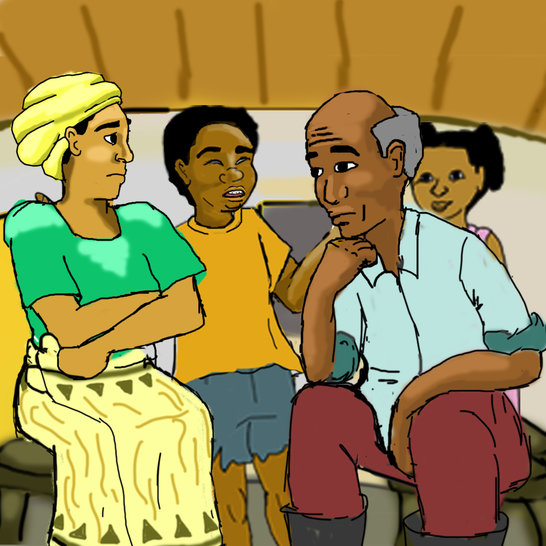
“Nakona kuyo muopelela mwendi uka kona ku angulukelwa hape,” Sakima a bulelela bashemi bahae. Kono bashemi bahae bahana. “Bona yale ufumile hahulu. Wena usibofu feela, cwale unahana kuli pina yahao ikamutusa ñi?”
“I can sing for him. He might be happy again,” Sakima told his parents.
But his parents dismissed him.
“He is very rich. You are only a blind boy. Do you think your song will help him?”
« Je peux chanter pour lui. Il redeviendra peut-être heureux, » dit Sakima à ses parents. Mais ses parents rejetèrent l’idée. « Il est très riche. Tu es seulement un garçon aveugle. Penses-tu vraiment que ta chanson l’aidera? »
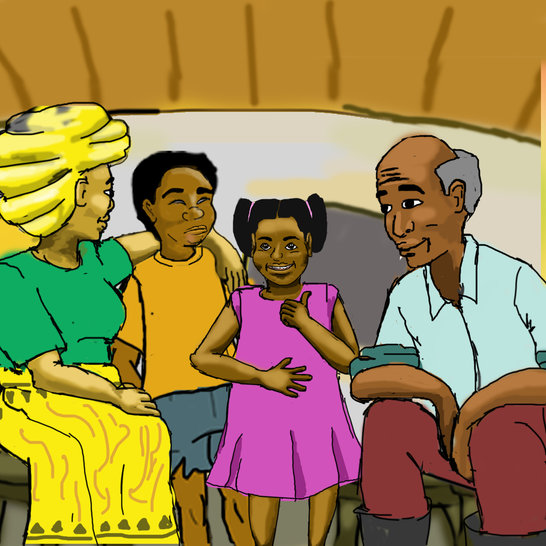
Nihakulicwalo, Sakima nasikazwafa mi kezelaahae amutusa. Ali, “Lipina za Sakima zani ombaombanga hanishwile tala mi niyena mufumi lika muombaomba cwalo.”
However, Sakima did not give up.
His little sister supported him.
She said, “Sakima’s songs soothe me when I am hungry. They will soothe the rich man too.”
Toutefois, Sakima ne démissionna pas. Sa petite sœur l’appuyait. Elle disait, « Les chansons de Sakima me calment quand j’ai faim. Elles calmeront l’homme riche aussi. »
Zazi lelitatama Sakima akupa kezelaahae wa mwanana kuli amusindekete kwandu ya mufumi.
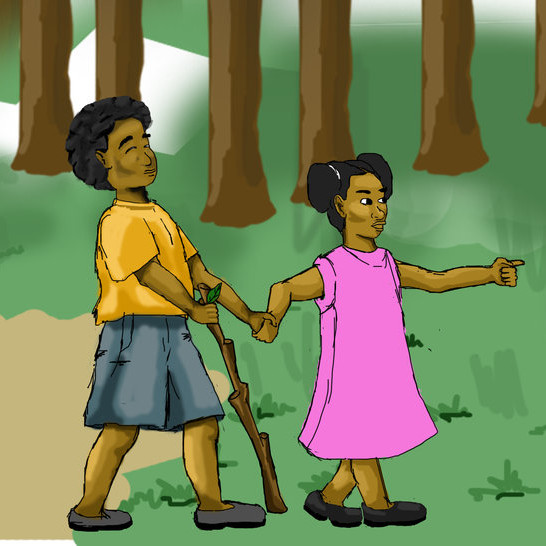
The following day, Sakima asked his little sister to lead him to the rich man’s house.
Le lendemain, Sakima demanda à sa petite sœur de le mener chez l’homme riche.
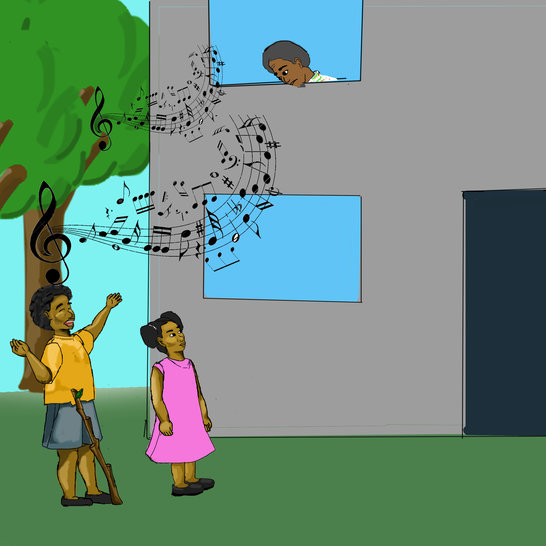
Hayema kwatasaa windo yetuna mi akala kuopela pina yanalata hahulu. Kabunya, toho ya mufumi yakala kubonahala mwa windo yeo.
He stood below one big window and began to sing his favourite song.
Slowly, the head of the rich man began to show through the big window.
Il se tint sous une grande fenêtre et commença à chanter sa chanson préférée. Lentement, la tête de l’homme riche apparu à la grande fenêtre.
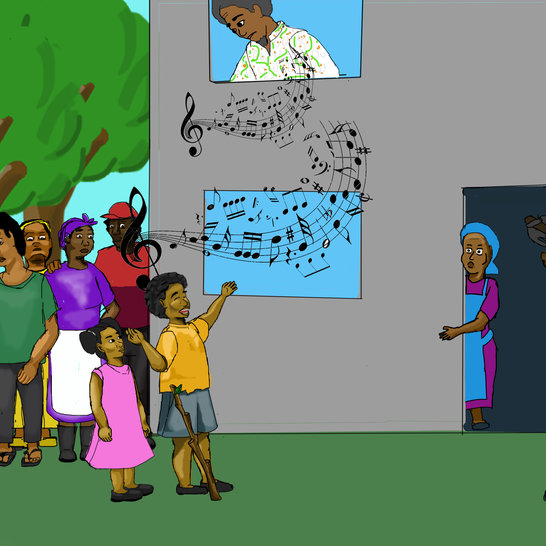
Babeleki batuhela zene baeza mi bateeleza kwa pina yende ya Sakima. Kono muuna yomuñwi ali, “Hakuna ya konile kuombaomba mufumi, cwale mucaha yo wa sibofu unahana kuli yena uka kona?”
The workers stopped what they were doing. They listened to Sakima’s beautiful song.
But one man said, “Nobody has been able to console the boss. Does this blind boy think he will console him?”
Les ouvriers arrêtèrent ce qu’ils faisaient. Ils écoutèrent la belle chanson de Sakima. Mais un homme dit, « Personne n’a été capable de consoler le patron. Est-ce que ce garçon aveugle pense qu’il pourra le consoler ? »
Sakima finished singing his song and turned to leave.
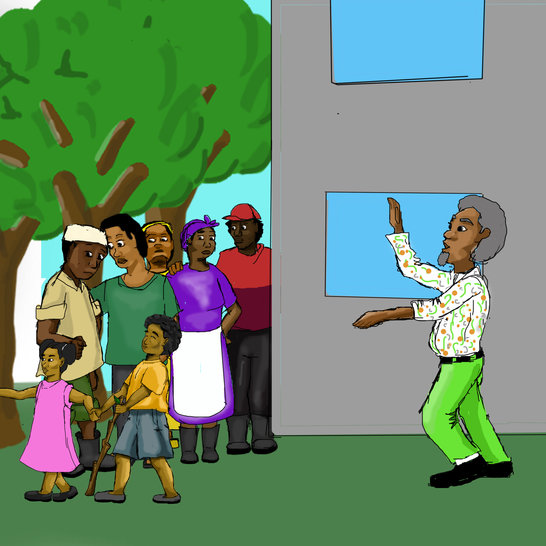
But the rich man rushed out and said, “Please sing again.”
Sakima termina de chanter sa chanson et s’apprêtait à partir. Mais l’homme riche sortit en vitesse et dit, « S’il te plaît, chante encore. »
Kanako onayeo, kwataha baana bababeli bananuzi mutu fa saala. Nebafumani mwanaa mufumi wa mushimani inge anatilwe ni kusiiwa kwa tuko anzila.
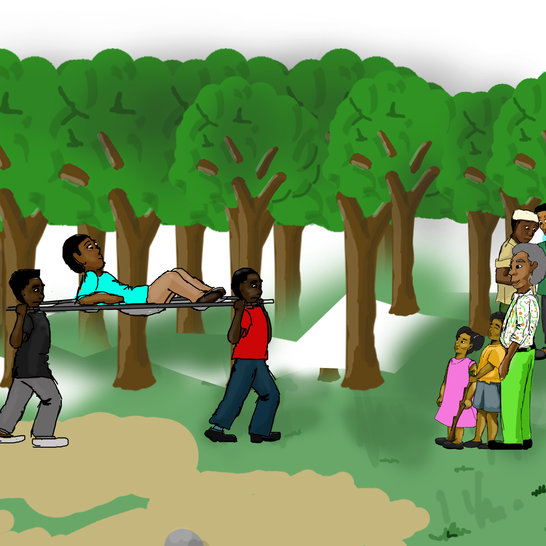
At that very moment, two men came carrying someone on a stretcher.
They had found the rich man’s son beaten up and left on the side of the road.
À ce moment, deux hommes sont arrivés en portant quelqu’un sur une civière. Ils avaient trouvé le fils de l’homme riche tabassé et abandonné sur le bord de la route.
Mufumi na tabile hahulu kubona mwanaa hae hape. Hafa Sakima mupuzo waku muombaomba. Haisa mwanaa hae ni Sakima kwa sipatela kuli hayoalafiwa kwa meeto ahae kuli hakale kubona hape.
The rich man was so happy to see his son again.
He rewarded Sakima for consoling him.
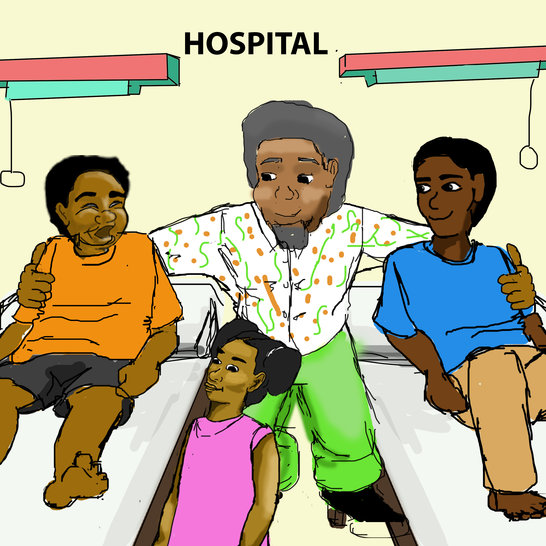
He took his son and Sakima to hospital so Sakima could regain his sight.
L’homme riche fut tellement content de revoir son fils. Il récompensa Sakima de l’avoir consolé. Il emmena les deux garçons à l’hôpital pour que Sakima puisse retrouver la vue.
 Ursula Nafula
 Peris Wachuka
 Muyunda Malambo
 SiLozi (Zambia)
 Level 3
 The audio for this story is currently not available.