The audio for this story is currently not available.
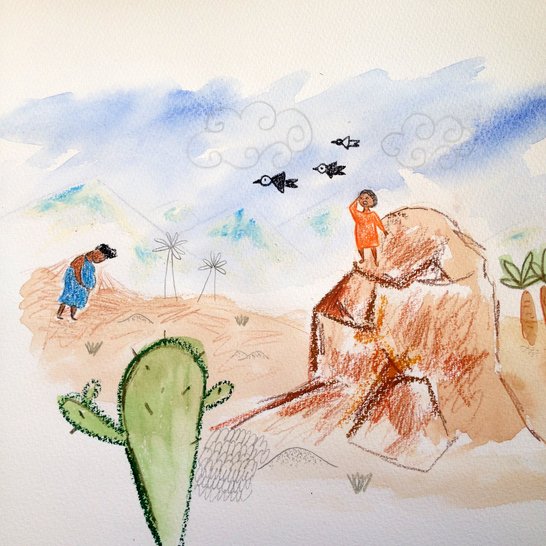
Neeli kanana ka kasizani kene kakalile kubona sibupeho sa sika sene sikomokisa senesili kwahule nyana.
It was a little girl who first saw the mysterious shape in the distance.
Une petite fille fut la première à voir la forme mystérieuse au loin.
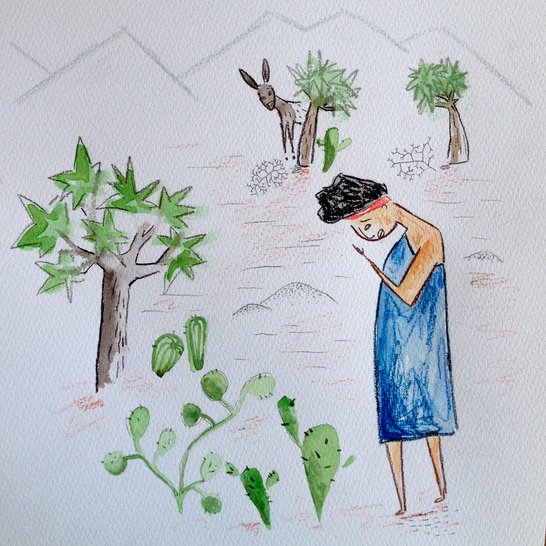
Sibupeho sa sika seo hanze sisutelela bukaufi, habona kuli neeli musali yana nani mulwalo omutuna hahulu.
As the shape moved closer, she saw that it was a heavily pregnant woman.
Tandis que la forme se rapprocha, la petite fille vit que c’était une femme enceinte de plusieurs mois.
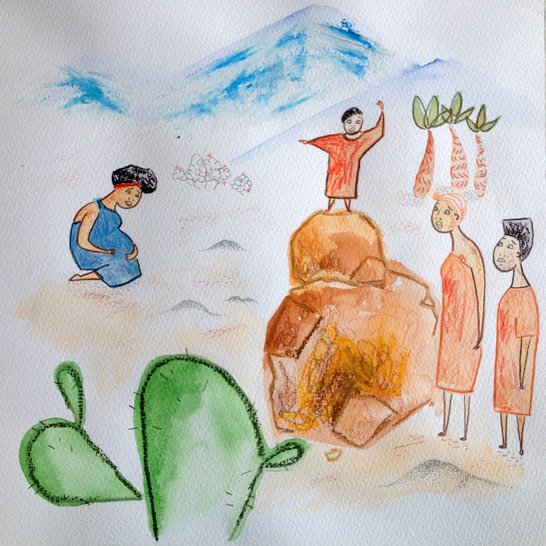
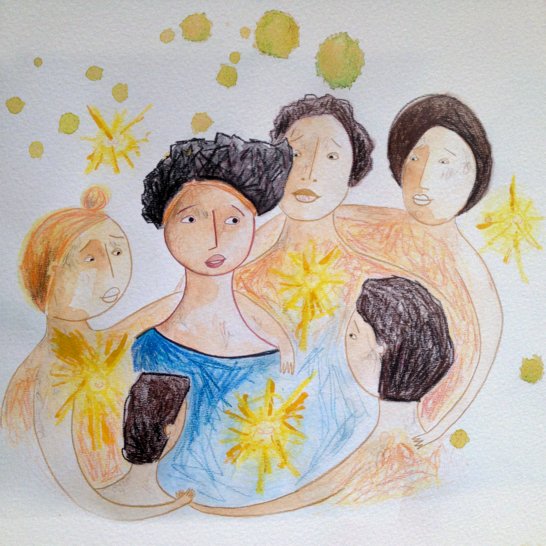
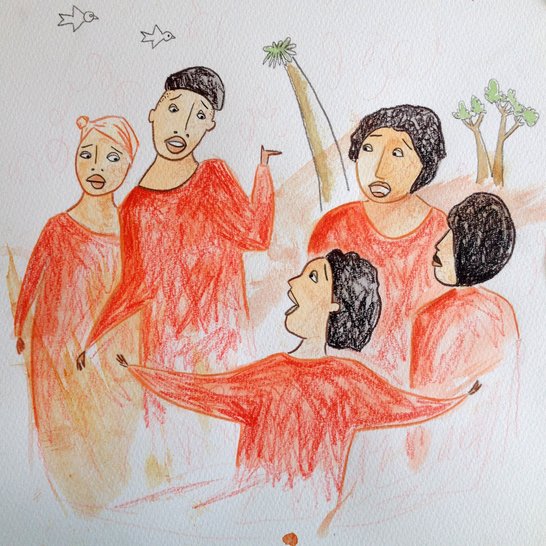
Kamaswabi kono kabundume, kasizani ka sutelela kwa tuko a musali yoo. “Luswanela kuina niyena,” batu bahabo kasizani babulela. “Luka mubabalela hande ni mwanaahae.”
Shy but brave, the little girl moved nearer to the woman.
“We must keep her with us,” the little girl’s people decided. “We’ll keep her and her child safe.”
Timide mais brave, la petite fille se rapprocha de la femme. « Nous devons la garder avec nous, » dit le peuple de la petite fille. « Nous la garderons en sécurité, ainsi que son enfant. »
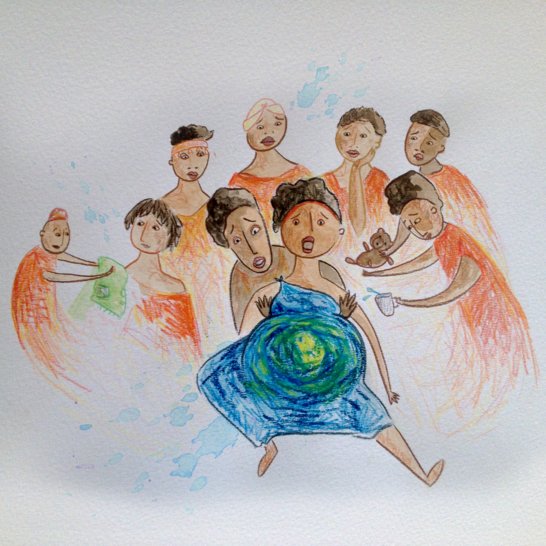
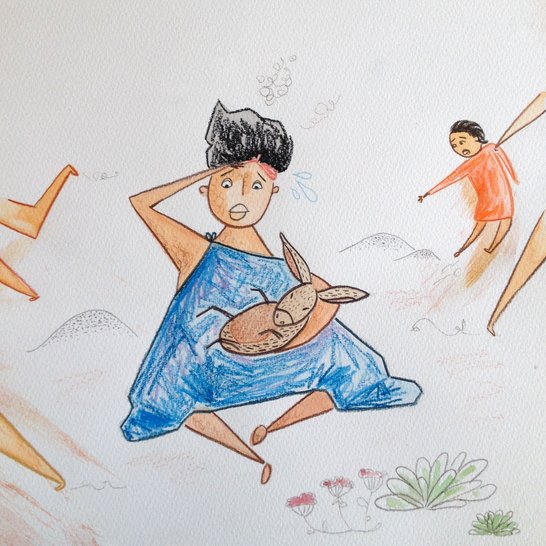
Kono hase babona mbututu, kaufela batulela mwamulaho ka kukomoka. “Mbongolo?!”
But when they saw the baby, everyone jumped back in shock.
“A donkey?!”
Mais quand ils virent le bébé, tous firent un saut en arrière. « Un âne ?! »
Kaufela bona bakala kukananisana. “Nelubulezi kuli lukababalela mushemi ni mbututu wahae, mi zeo kona zelukaeza,” babañwi babulela. “Kono bakalutiseza bumai!” babañwi babulela.
Everyone began to argue.
“We said we would keep mother and child safe, and that’s what we’ll do,” said some.
“But they will bring us bad luck!” said others.
Tout le monde commença à se disputer. « Nous avions dit que nous garderions mère et enfant en sécurité et c’est ce que nous ferons, » dirent quelques-uns. « Mais ils vont nous porter malchance ! » dirent d’autres.
Musali yoo haipumana hanosi hape. Haikomokela ili sanakaeza ni mbututu yahae yecwalo yeo. Abilaezwa ki zanakaeza kuli hakone kuitusa hanosi.
And so the woman found herself alone again.
She wondered what to do with this awkward child.
She wondered what to do with herself.
Ainsi, la femme se retrouva seule encore une fois. Elle se demanda quoi faire de cet enfant embarrassant. Elle se demanda quoi faire d’elle-même.
Kono kwanalule-lule halumela ni kuikeleza kuli ki mwanahae mi kiyena mahe Mbongolo yeo.
But finally she had to accept that he was her child and she was his mother.
Mais elle dut finalement accepter qu’il était son enfant et qu’elle était sa mère.
Cwale, kambe mwanana yoo nainelelezi onacwalo yomunyinyani, nekukaba ni shutano. Kono Mbongolo yamwana yahula mane kufita fa kupalelwa kukwana kwa mukokoto wa maayona. Mi nihaneilika katata, neisakoni kuba ni mikwa yeswana sina ya batu. Bo maayona hañata nebakatala ni kufilikana. Fokuñwi nebaisebezisanga misebezi ya lifolofolo.
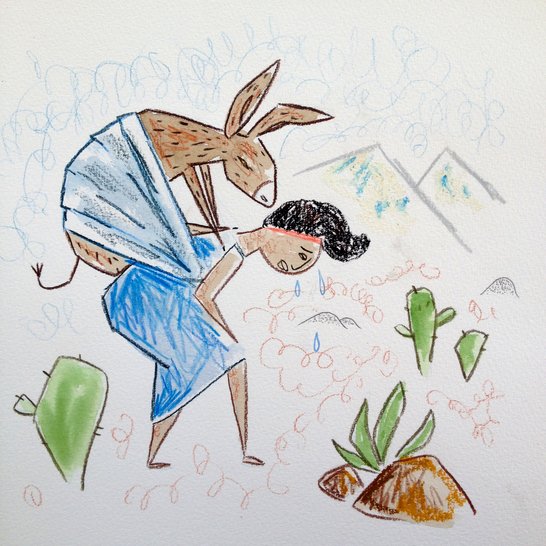
Now, if the child had stayed that same, small size, everything might have been different. But the donkey child grew and grew until he could no longer fit on his mother’s back.
And no matter how hard he tried, he could not behave like a human being. His mother was often tired and frustrated. Sometimes she made him do work meant for animals.
Maintenant, si l’enfant était resté petit, tout aurait été différent. Mais l’enfant-âne grandit et grandit jusqu’à ce qu’il ne puisse plus être porté sur le dos de sa mère. Et malgré ses plus grands efforts, il ne pouvait pas se comporter comme un être humain. Sa mère était très souvent fatiguée et frustrée. Parfois elle l’obligeait à faire du travail destiné aux animaux.
Mifilifili ni bunyemi zahula mwahalaa minahano ya Mbongolo. Neisakoni kueza ze ni zale. Neisakoni kuba mo ni mwale. Seinyema hahulu kueza kuli, zazi leliñwi, yalahela bo maayona fafasi.
Confusion and anger built up inside Donkey. He couldn’t do this and he couldn’t do that. He couldn’t be like this and he couldn’t be like that.
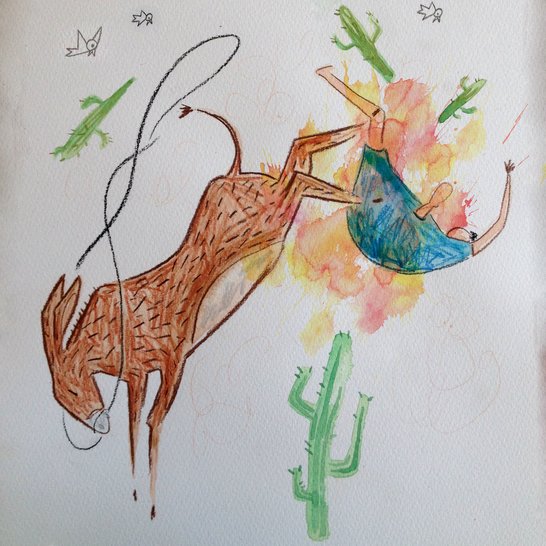
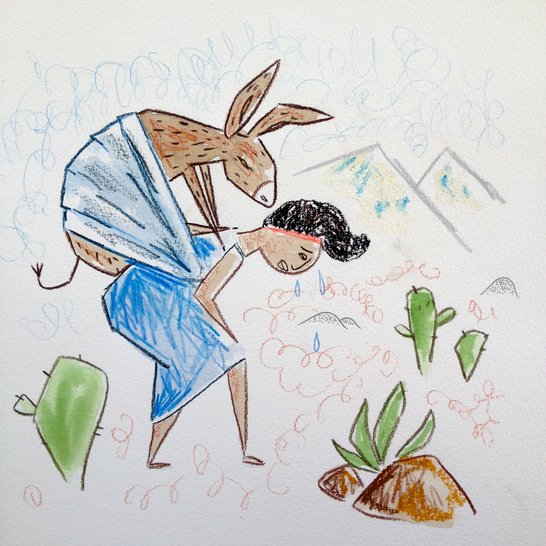
He became so angry that, one day, he kicked his mother to the ground.
La confusion et la colère s’accumulèrent à l’intérieur d’Âne. Il ne pouvait pas faire ceci et il ne pouvait pas faire cela. Il ne pouvait pas être comme ceci et il ne pouvait pas être comme cela. Il devint tellement fâché qu’un jour il botta sa mère par terre.
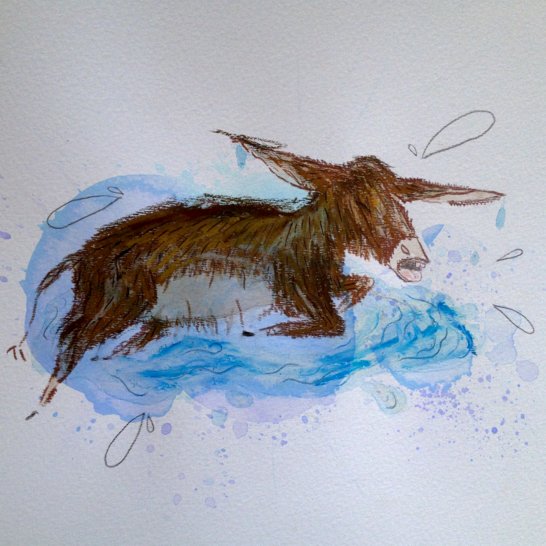
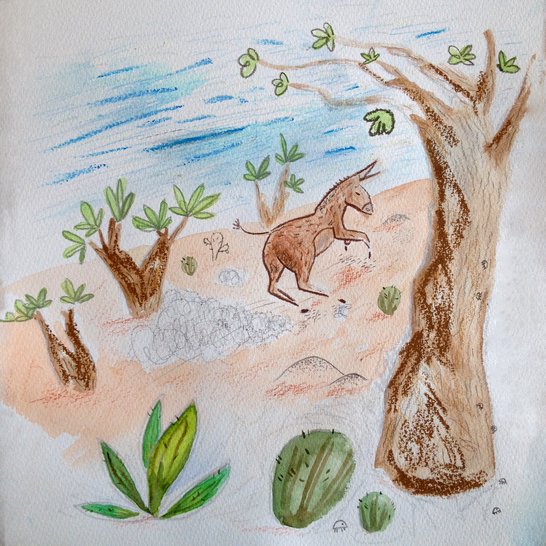
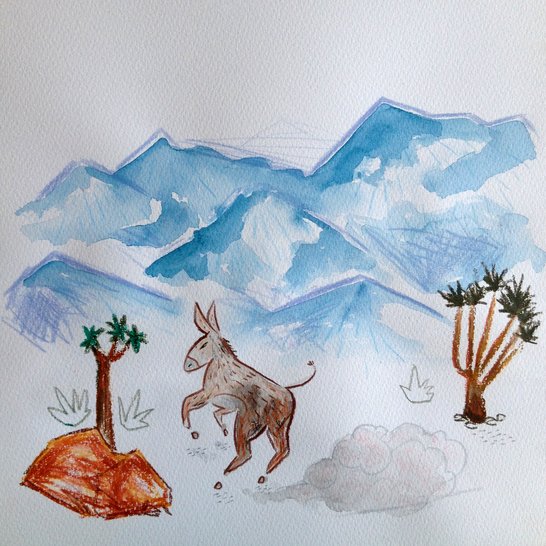
Donkey was filled with shame. He started to run away as far and fast as he could.
Âne fut rempli de honte. Il commença à se sauver aussi vite et aussi loin qu’il pu.
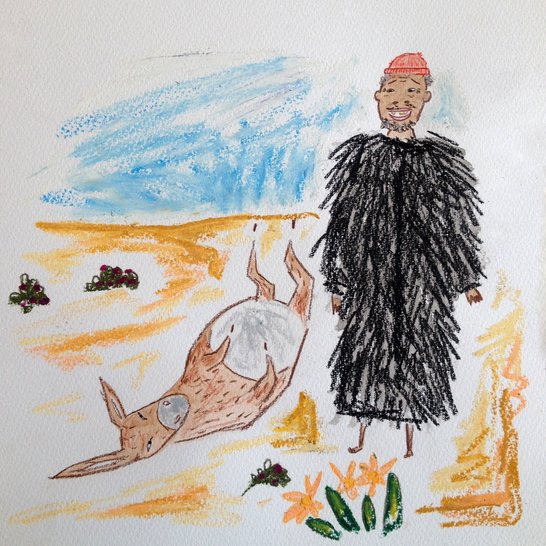
Haito tuhela kumata, neseili busihu mi Mbongolo yalateha. “Hee hau?” ya shobotela lififi. “Hee Hau?” mulumo seuikutela. Neinzi inosi. Yaiputa-puta inge mbola, buloko tuna bwaiswala mi yalobala-maswe kalipilaelo.
By the time he stopped running, it was night, and Donkey was lost.
“Hee haw?” he whispered to the darkness.
“Hee Haw?” it echoed back. He was alone.
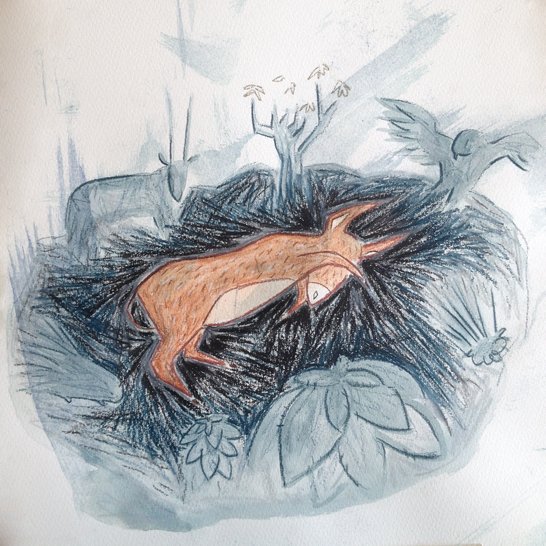
Curling himself into a tight ball, he fell into a deep and troubled sleep.
Quand il s’arrêta de courir, la nuit était tombée et Âne était perdu. « Hi han ? » il chuchota à la noirceur. « Hi han ? » retourna la noirceur en écho. Il était seul. Se lovant en petite boule, il tomba dans un sommeil profond et agité.
Mbongolo yazuha mi yafumana muuna-muhulu yanailubukezi. Yatalimela mwa meeto a muuna-muhulu yo ni kukala kuba ni sepo.
Donkey woke up to find a strange old man staring down at him. He looked into the old man’s eyes and started to feel a twinkle of hope.
Âne se réveilla et vit un vieil homme étrange qui le regardait. Il regarda dans les yeux du vieil homme et commença à ressentir un brin d’espoir.
Mbongolo yaya kuyoina ni muuna-muhulu yoo, yanailutile miinelo yeshutana-shutana mwa kuipiliseza. Mbongolo yateeleza ni kuituta zeñata hahulu mi ni muuna-muhulu yoo, niyena haitutani kuteeleza cwalo. Nebatusana ni kuseha hamoho.
Donkey went to stay with the old man, who taught him many different ways to survive.
Donkey listened and learned, and so did the old man. They helped each other, and they laughed together.
Âne partit vivre avec le vieil homme, qui lui montra plusieurs façons de survivre. Âne écouta et apprit, et le vieil homme aussi. Ils s’aidèrent l’un l’autre et ils rirent ensemble.
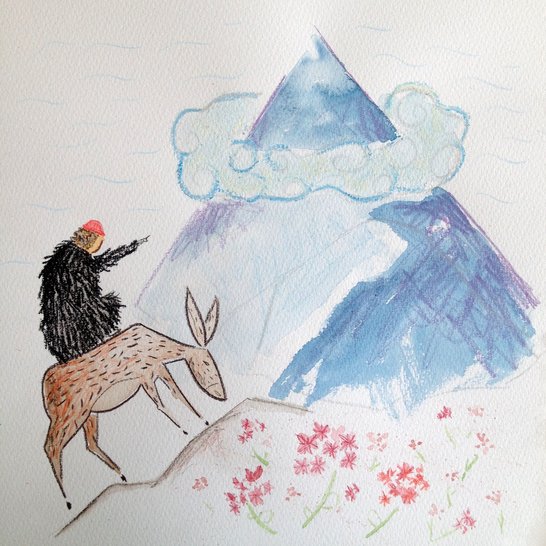
Kalizazi leliñwi, ili nako ya kakusasani, muuna-muhulu abulelela Mbongolo kuli imushimbe kumuisa fa halimu a lilundu.
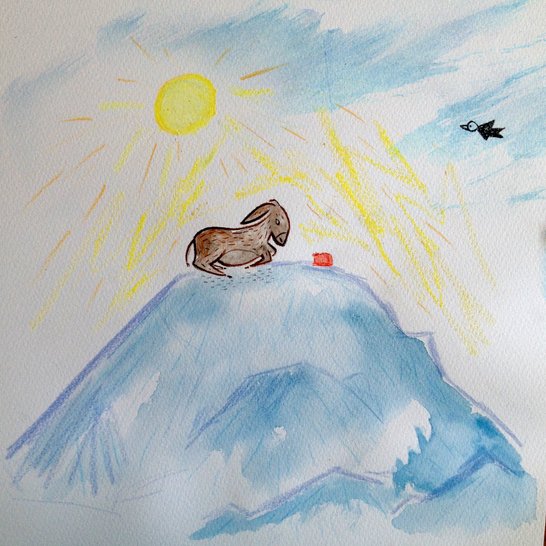
One morning, the old man asked Donkey to carry him to the top of a mountain.
Un matin, le vieil homme demanda à Âne de le transporter jusqu’au sommet d’une montagne.
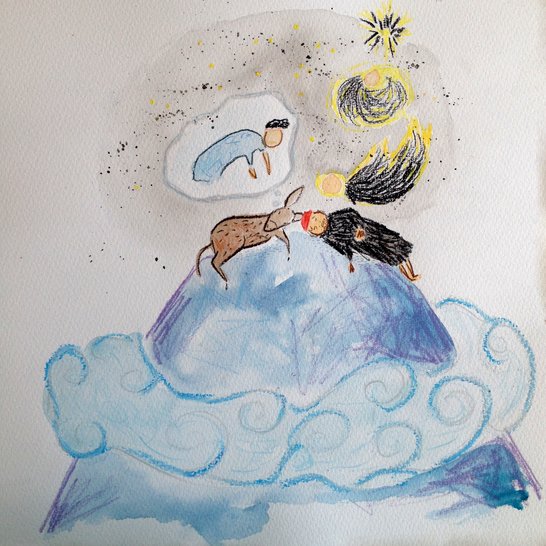
Fahalimu a lilundu mwahalaa malu bautwa buloko mi balobala. Mbongolo yalola kuli bo maayona nebakula mi nebaibiza. Mi aito zuha…
High up amongst the clouds they fell asleep.
Donkey dreamed that his mother was sick and calling to him.
And when he woke up…
En haut, parmi les nuages, ils s’endormirent. Âne rêva que sa mère était malade et qu’elle l’appelait. Et quand il se réveilla…
… malu nasabonahali hamoho cwalo ni mulikanaayona, muuna-muhulu.
… the clouds had disappeared along with his friend, the old man.
… les nuages avaient disparu avec son ami le vieil homme.
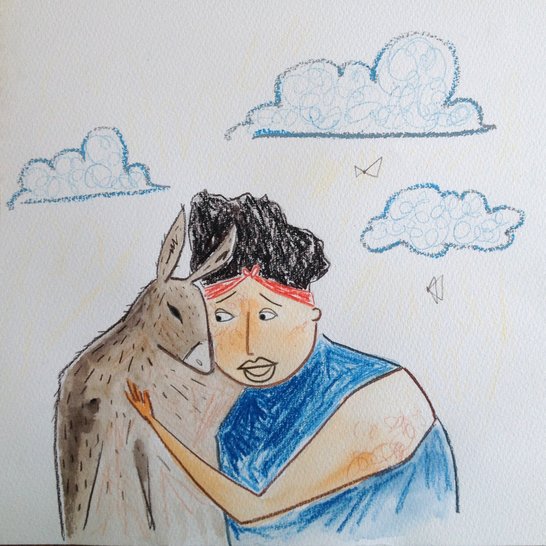
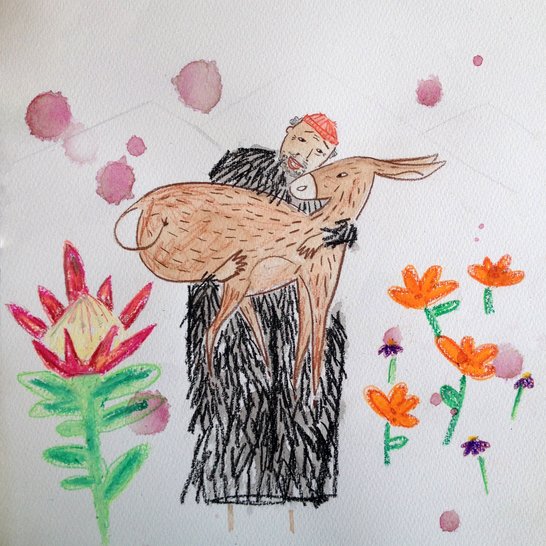
Donkey found his mother, alone and mourning her lost child. They stared at each other for a long time.
And then hugged each other very hard.
Âne trouva sa mère, seule et en deuil pour son enfant perdu. Ils se regardèrent longtemps. Puis ils s’embrassèrent très fort.
Mbongolo ya mwana ni bo maayona bahula hamoho mi bafumana linzila zeshutana-shutana mwakupilela hamoho. Hanyinyani-hanyinyani, kaufela mabasi amañwi anabapani ni bona akala kutwaela ni kupila hande.
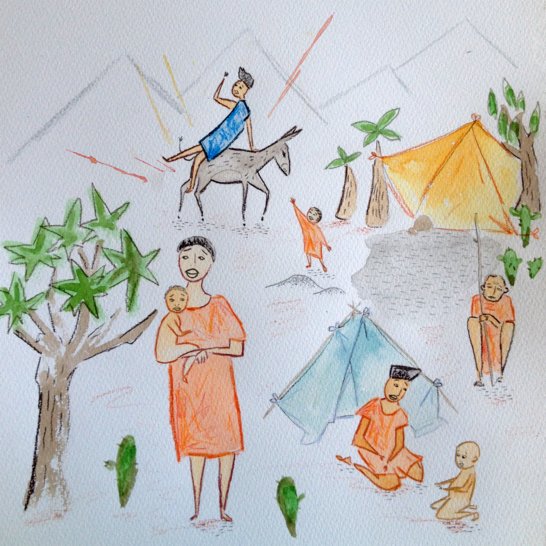
The donkey child and his mother have grown together and found many ways of living side by side.
Slowly, all around them, other families have started to settle.
L’enfant-âne et sa mère ont grandi ensemble et ils ont trouvé plusieurs manières de coexister. Lentement, tout autour d’eux, d’autres familles ont commencé à s’installer.
 Lindiwe Matshikiza
 Meghan Judge
 Christabel Songiso, Akombelwa Muyangana
 SiLozi (Zambia)
 Level 3
 The audio for this story is currently not available.