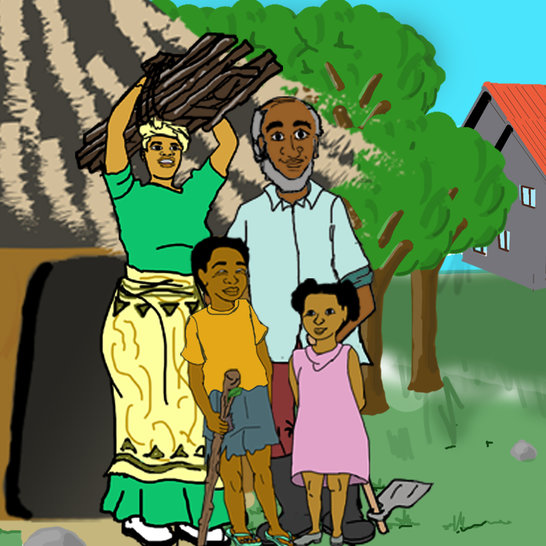
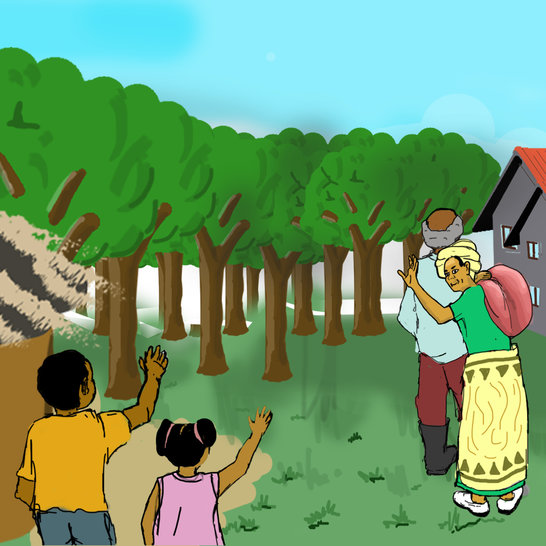
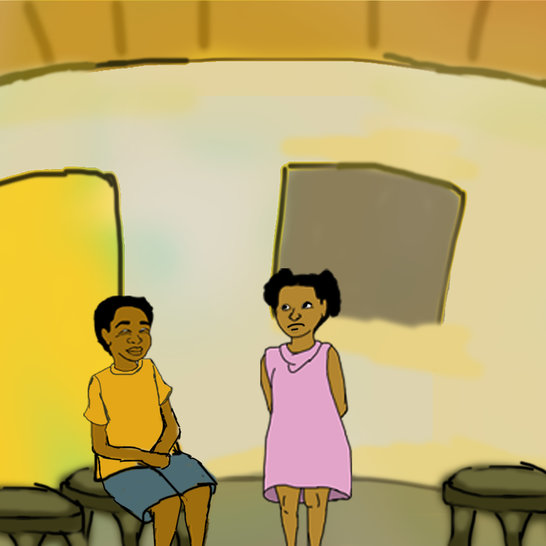
Sakima het saam met sy ouers en vierjarige suster op ‘n ryk man se grond gewoon. Hulle grasdak-hut was aan die einde van ‘n ry bome.
Sakima lived with his parents and his four year old sister.
They lived on a rich man’s land.
Their grass-thatched hut was at the end of a row of trees.
Sakima vivait avec ses parents et sa petite sœur, qui avait quatre ans. Ils vivaient sur la terre d’un homme riche. Leur hutte à toit de chaume était située au bout d’un rang d’arbres.
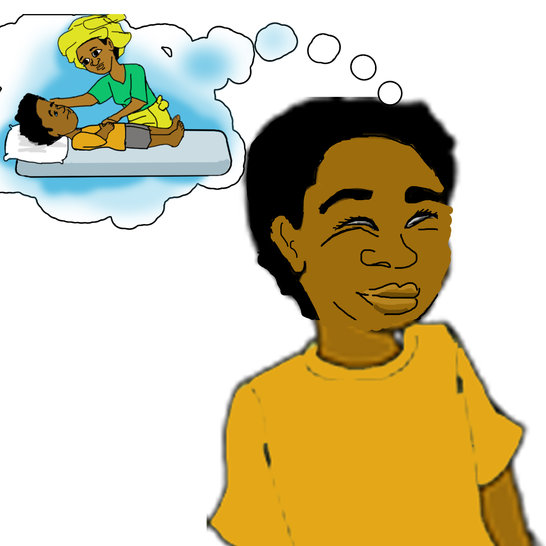
Toe Sakima drie jaar oud was, het hy siek geword en sy sig verloor. Sakima was ‘n talentvolle seun.
When Sakima was three years old, he fell sick and lost his sight.
Sakima was a talented boy.
Quand Sakima avait trois ans, il est tombé malade et a perdu la vue. Sakima était un garçon avec beaucoup de talent.
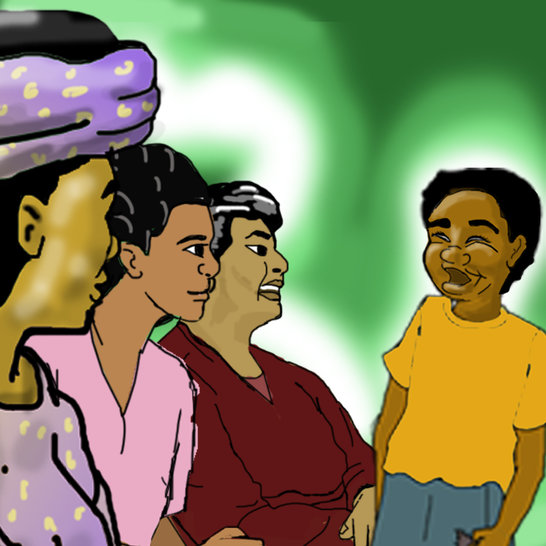
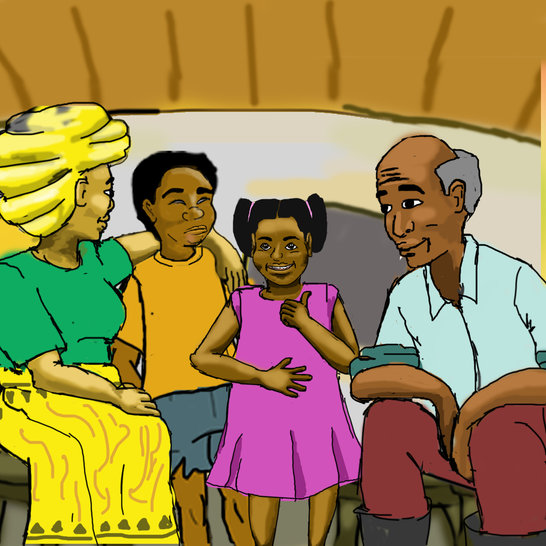
Sakima het baie dinge gedoen wat ander sesjarige seuns nie gedoen het nie. Hy kon byvoorbeeld saam met ouer mense van die dorpie sit en belangrike sake bespreek.
Sakima did many things that other six year old boys did not do.
For example, he could sit with older members of the village and discuss important matters.
Sakima faisait beaucoup de choses que d’autres garçons de six ans ne faisaient pas. Par exemple, il pouvait se tenir avec les membres plus âgés du village et discuter de questions importantes.
Sakima se ouers het by die ryk man se huis gewerk. Hulle het vroegoggend van die huis af weggegaan en laataand teruggekom. Sakima het by sy sussie gebly.
The parents of Sakima worked at the rich man’s house.
They left home early in the morning and returned late in the evening.
Sakima was left with his little sister.
Les parents de Sakima travaillaient chez l’homme riche. Ils quittaient leur maison tôt le matin et revenaient tard le soir. Sakima restait seul chez eux avec sa petite sœur.
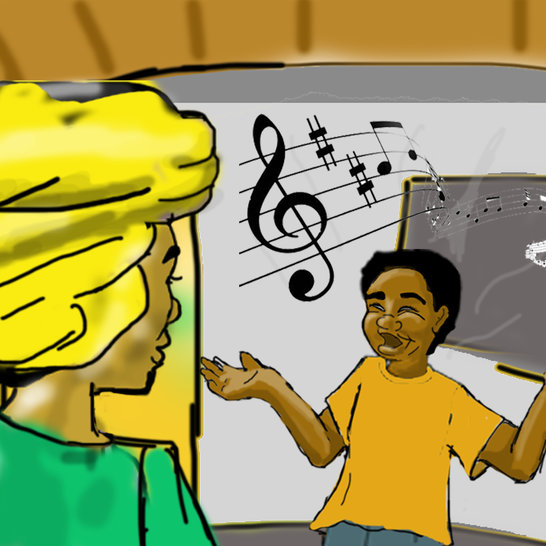
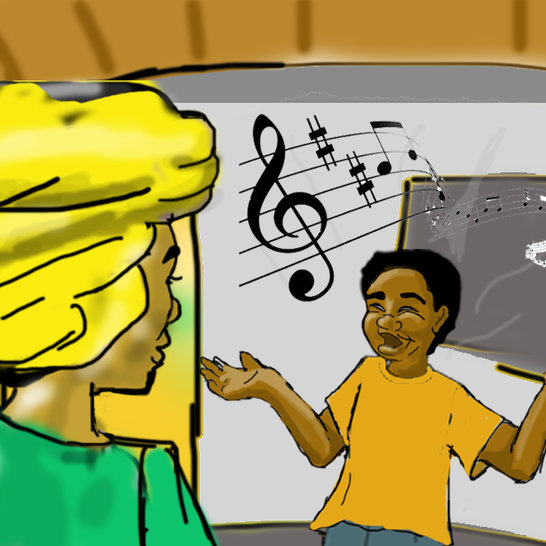
Sakima het gehou van sing. Eendag het sy ma hom gevra: “Waar leer jy die liedjies, Sakima?”
Sakima loved to sing songs.
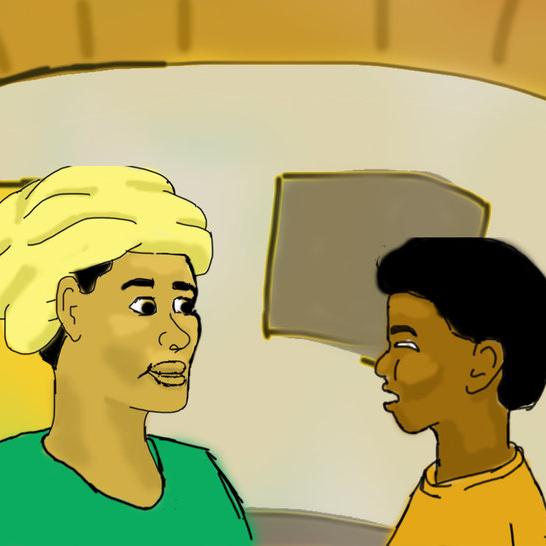
One day his mother asked him, “Where do you learn these songs from, Sakima?”
Sakima adorait chanter des chansons. Un jour sa mère lui demanda, « Où apprends-tu à chanter ces chansons, Sakima? »
Sakima het geantwoord, “Hulle kom net, Mamma. Ek hoor hulle in my kop en dan sing ek.”
Sakima answered, “They just come, mother. I hear them in my head and then I sing.”
Sakima répondit, « Elles me viennent tout simplement, maman. Je les entends dans ma tête et ensuite je chante. »
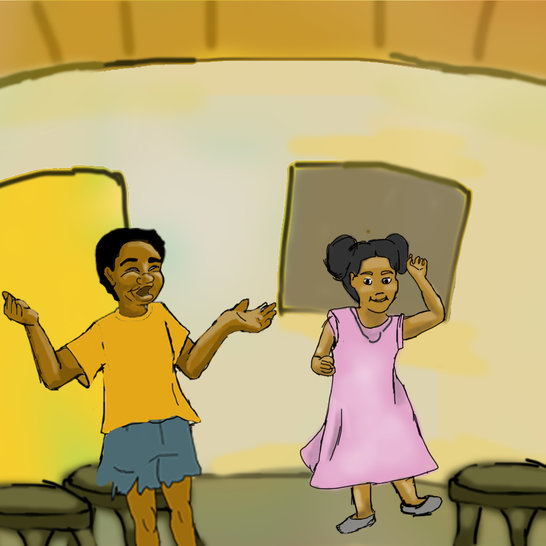
Sakima het daarvan gehou om vir sy sussie te sing, veral as sy honger was. Sy sussie sou luister hoe hy sy geliefkoosde lied sing. Sy sou wieg op die maat van die strelende musiek.
Sakima liked to sing for his little sister, especially, if she felt hungry.
His sister would listen to him singing his favourite song.
She would sway to the soothing tune.
Sakima aimait chanter pour sa petite sœur, surtout si elle avait faim. Sa sœur l’écoutait chanter sa chanson préférée. Elle se balançait en écoutant la chanson apaisante.
“Sal jy dit weer en weer sing, Sakima,” het sy sussie hom gesmeek. Sakima sou instem en dit oor en oor sing.
“Can you sing it again and again, Sakima,” his sister would beg him.
Sakima would accept and sing it over and over again.
« Peux-tu la chanter encore et encore, Sakima? » le suppliait sa sœur. Sakima acceptait et la chantait encore et encore.
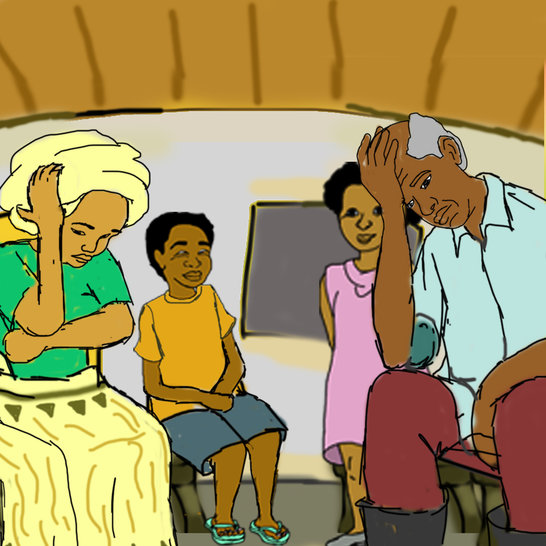
Een aand toe sy ouers tuiskom, was hulle baie stil. Sakima het geweet dat iets verkeerd was.
One evening when his parents returned home, they were very quiet.
Sakima knew that there was something wrong.
Un soir quand ses parents sont revenus chez eux, ils étaient très tranquilles. Sakima savait qu’il y avait un problème.
“Wat is verkeerd, Mamma, Pappa?” het Sakima gevra. Hy moes hoor dat die ryk man se seun vermis was. Die man was baie hartseer en eensaam.
“What is wrong, mother, father?” Sakima asked.
Sakima learned that the rich man’s son was missing.
The man was very sad and lonely.
« Qu’est-ce qu’il y a, maman et papa? » Sakima demanda. Sakima apprit que le fils de l’homme riche avait disparu. L’homme était très triste et seul.
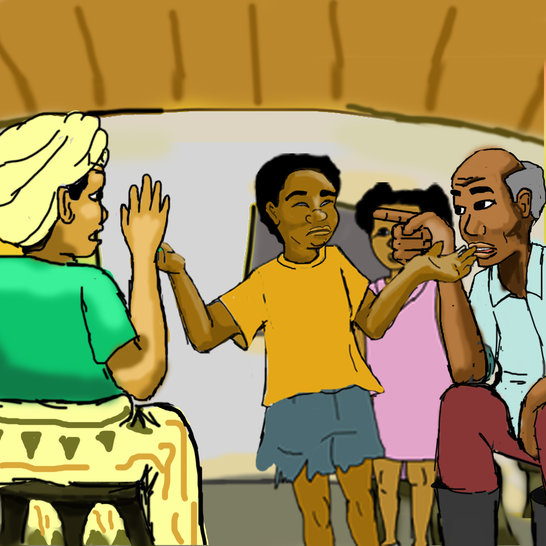
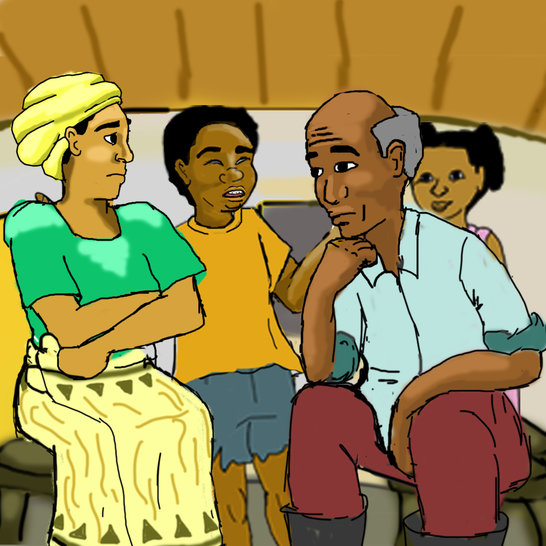
“Ek kan vir hom sing. Miskien kan hy weer gelukkig wees,” het Sakima vir sy ouers gesê. Maar sy ouers het nee gesê. “Hy is baie ryk. Jy is net ‘n blinde seuntjie. Dink jy jou lied sal hom help?”
“I can sing for him. He might be happy again,” Sakima told his parents.
But his parents dismissed him.
“He is very rich. You are only a blind boy. Do you think your song will help him?”
« Je peux chanter pour lui. Il redeviendra peut-être heureux, » dit Sakima à ses parents. Mais ses parents rejetèrent l’idée. « Il est très riche. Tu es seulement un garçon aveugle. Penses-tu vraiment que ta chanson l’aidera? »
Sakima het nie opgegee nie. Sy sussie het hom ondersteun. Sy het gesê: “Sakima se liedjies troos my as ek honger is. Hulle sal die ryk man ook troos.”
However, Sakima did not give up.
His little sister supported him.
She said, “Sakima’s songs soothe me when I am hungry. They will soothe the rich man too.”
Toutefois, Sakima ne démissionna pas. Sa petite sœur l’appuyait. Elle disait, « Les chansons de Sakima me calment quand j’ai faim. Elles calmeront l’homme riche aussi. »
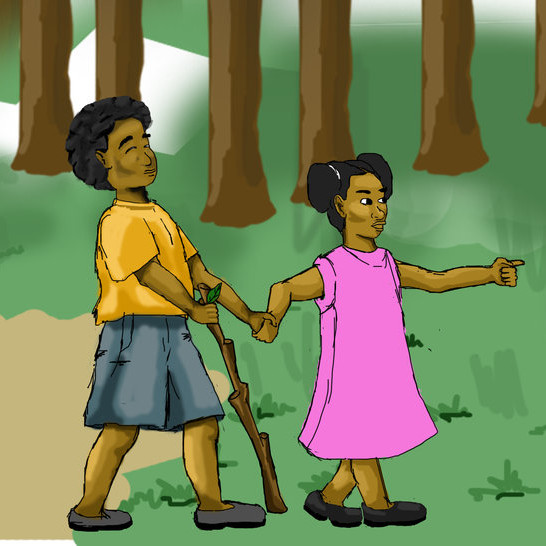
Die volgende dag het Sakima sy sussie gevra om hom na die ryk man se huis toe te lei.
The following day, Sakima asked his little sister to lead him to the rich man’s house.
Le lendemain, Sakima demanda à sa petite sœur de le mener chez l’homme riche.
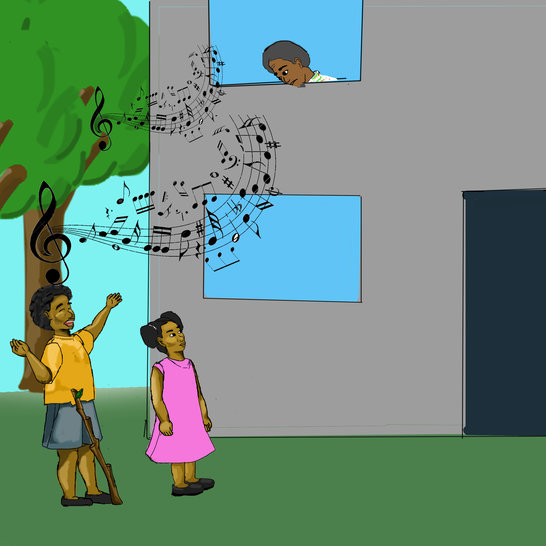
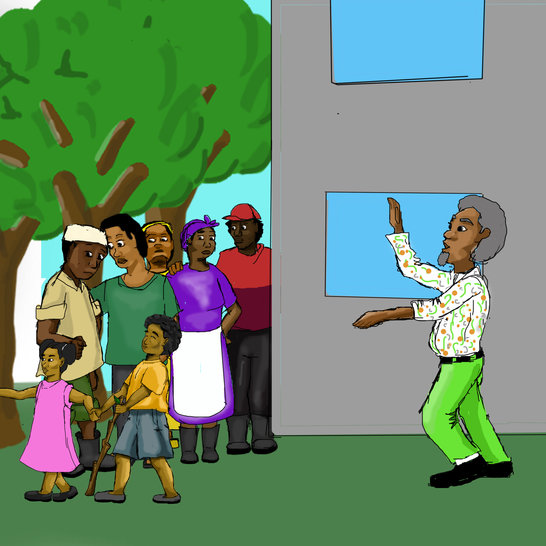
Hy het onder die een groot venster gaan staan en begin om sy geliefkoosde lied te sing. Stadig het die ryk man se kop deur die groot venster sigbaar geword.
He stood below one big window and began to sing his favourite song.
Slowly, the head of the rich man began to show through the big window.
Il se tint sous une grande fenêtre et commença à chanter sa chanson préférée. Lentement, la tête de l’homme riche apparu à la grande fenêtre.
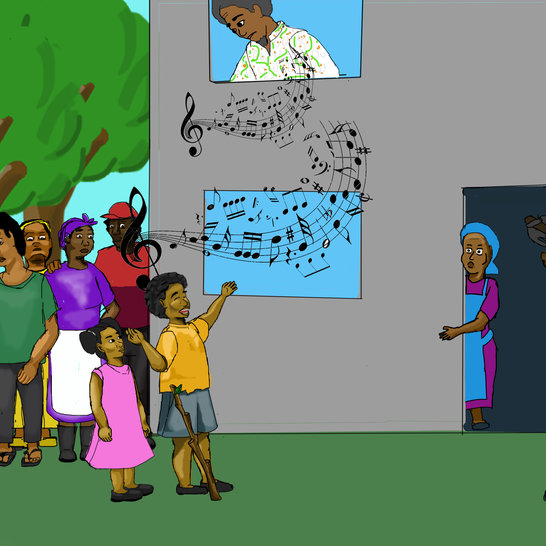
Die werkers het hul werk gestaak. Hulle het na Sakima se pragtige lied geluister. Een van die mans het egter gesê: “Niemand kon nog die baas vertroos nie. Dink hierdie blinde seun hy kan hom troos?”
The workers stopped what they were doing. They listened to Sakima’s beautiful song.
But one man said, “Nobody has been able to console the boss. Does this blind boy think he will console him?”
Les ouvriers arrêtèrent ce qu’ils faisaient. Ils écoutèrent la belle chanson de Sakima. Mais un homme dit, « Personne n’a été capable de consoler le patron. Est-ce que ce garçon aveugle pense qu’il pourra le consoler ? »
Sakima het sy lied klaar gesing en omgedraai om weg te gaan, maar die ryk man het buitentoe gehardloop en gesê: “Sing asseblief weer.”
Sakima finished singing his song and turned to leave.
But the rich man rushed out and said, “Please sing again.”
Sakima termina de chanter sa chanson et s’apprêtait à partir. Mais l’homme riche sortit en vitesse et dit, « S’il te plaît, chante encore. »
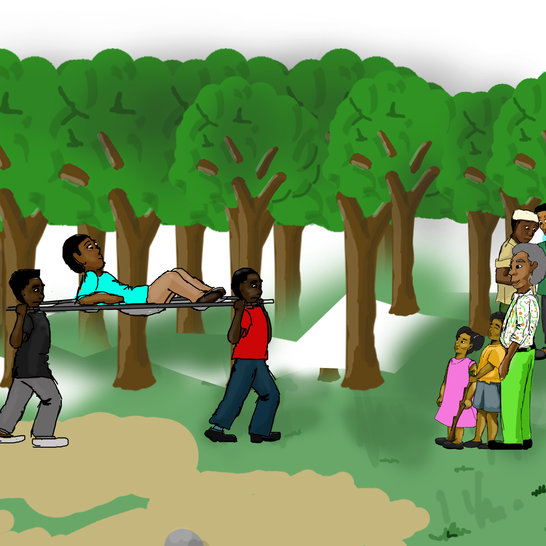
Op daardie oomblik het twee mans met iemand op ‘n draagbaar aangekom. Hulle het die ryk man se seun gekry. Hy was geslaan en langs die pad gelaat.
At that very moment, two men came carrying someone on a stretcher.
They had found the rich man’s son beaten up and left on the side of the road.
À ce moment, deux hommes sont arrivés en portant quelqu’un sur une civière. Ils avaient trouvé le fils de l’homme riche tabassé et abandonné sur le bord de la route.
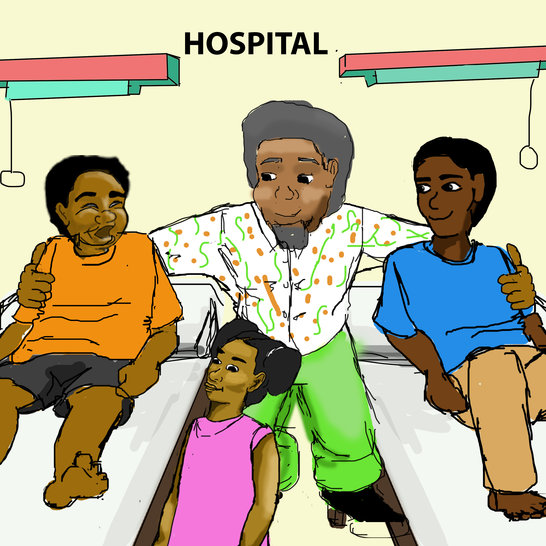
Die ryk man was so bly om sy seun weer te sien. Hy het Sakima beloon omdat hy hom getroos het. Hy het sy seun en Sakima hospitaal toe geneem, sodat Sakima sy sig kon herwin.
The rich man was so happy to see his son again.
He rewarded Sakima for consoling him.
He took his son and Sakima to hospital so Sakima could regain his sight.
L’homme riche fut tellement content de revoir son fils. Il récompensa Sakima de l’avoir consolé. Il emmena les deux garçons à l’hôpital pour que Sakima puisse retrouver la vue.