Change language
English
French
Afrikaans
Amharic
Arabic
German
Portuguese
Somali
Spanish
Swahili
Zulu
More languages...
Back to stories list
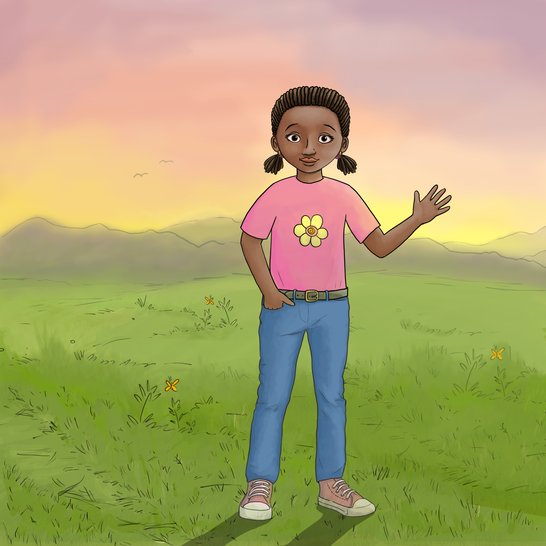
UKhalai lona. Uneminyaka eyisikhombisa. Igama lakhe lichaza ‘olungile’ ngolimi lwakubo, isi Lubukusu.
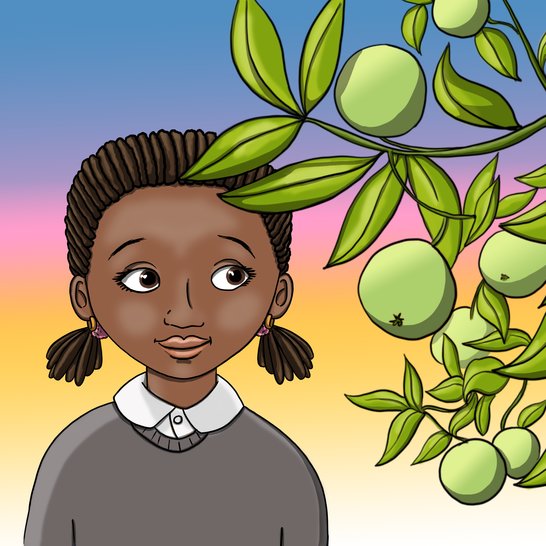
This is Khalai. She is seven years old. Her name means ‘the good one’ in her language, Lubukusu.
Voici Khalai. Elle a sept ans. Son nom signifie « celle qui est bonne » dans sa langue, le lubukusu.
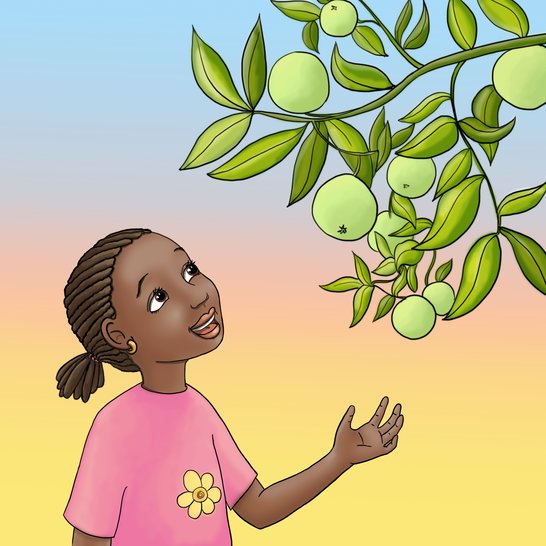
UKhalai uvuka ekuseni akhulume nesihlahla samawolintshi. “Ngiyacela sihlahla samawolintshi, khula ubemkhulu usiphe amawolintshi amaningi avuthiwe.”
Khalai wakes up and talks to the orange tree. “Please orange tree, grow big and give us lots of ripe oranges.”
Khalai se réveille et parle à l’oranger. « S’il-te-plait oranger, grandis et donne-nous beaucoup d’oranges mûres. »
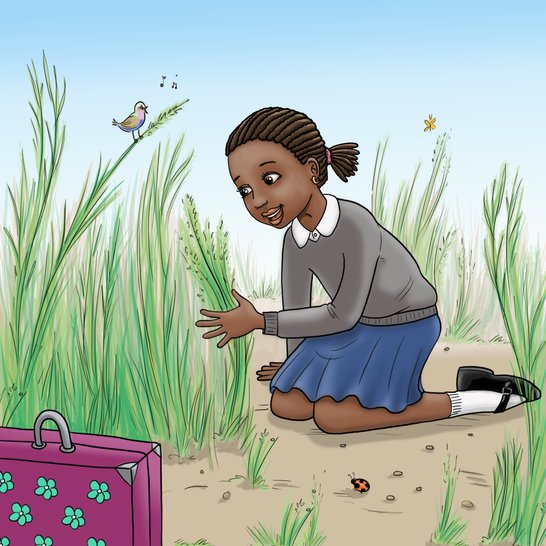
UKhalai uya esikoleni. Endleleni ukhuluma notshani. “Ngiyakucela tshani, yiba luhlaza kakhulu ungomi.”
Khalai walks to school. On the way she talks to the grass. “Please grass, grow greener and don’t dry up.”
Khalai marche à l’école. En chemin, elle parle à l’herbe. « S’il-te-plait herbe, deviens plus verte et ne sèche pas. »
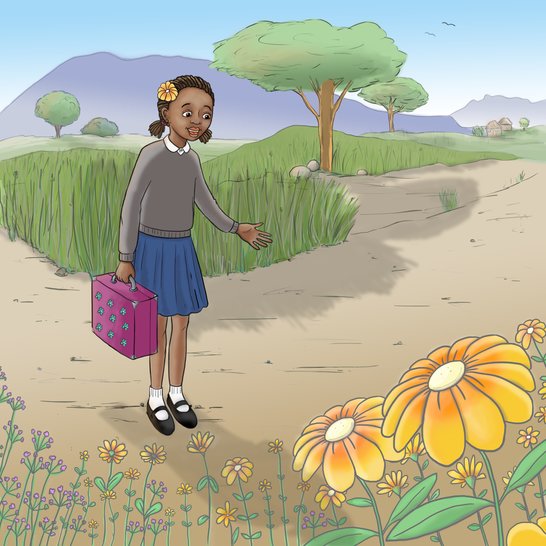
UKhalai wedlula izimbali zasendle, “Ngiyanicela zimbali, hlalani niqhakaza ukuze nginihlome ezinweleni zami.”
Khalai passes wild flowers. “Please flowers, keep blooming so I can put you in my hair.”
Khalai passe vers des fleurs sauvages. « S’il-vous-plait fleurs, continuez à fleurir pour que je puisse vous porter dans mes cheveux. »
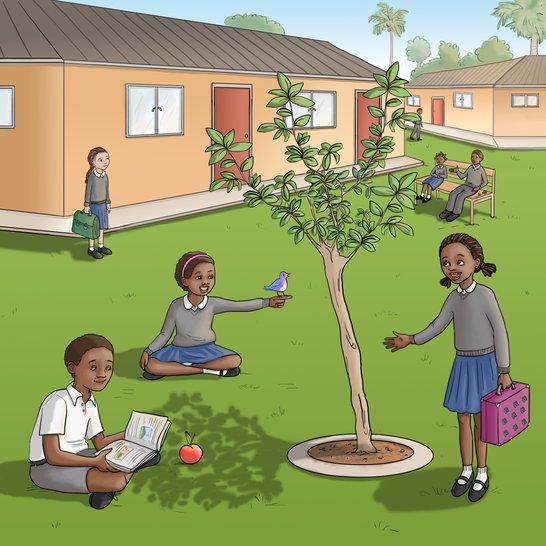
Esikoleni, uKhalai ukhuluma nesihlahla esimila phakathi nezakhiwo, “Ngiyakucela sihlahla, khipha amahlamvu amade ukuze sifunde siphansi komthunzi wakho.”
At school, Khalai talks to the tree in the middle of the compound. “Please tree, put out big branches so we can read under your shade.”
À l’école, Khalai parle à l’arbre au centre du camp. « S’il-te-plait arbre, fais pousser de grandes branches pour que nous puissions lire sous ton ombre. »
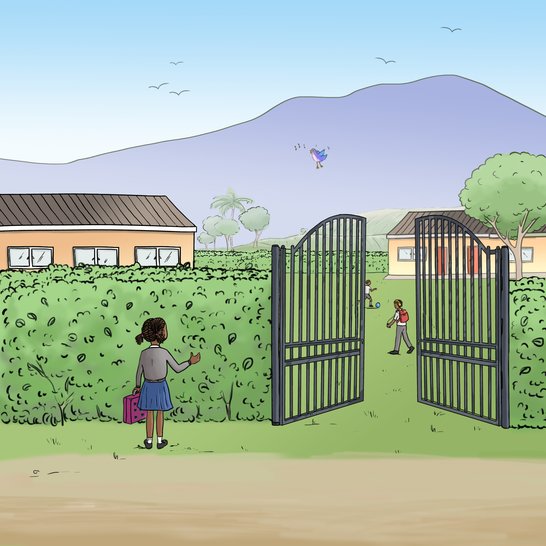
UKhalai ukhuluma nothango oluzungeze isikole, “Ngicela ukhule uqine ukuze uvimbe abantu ababi bangangeni.”
Khalai talks to the hedge around her school. “Please grow strong and stop bad people from coming in.”
Khalai parle à la haie qui entoure son école. « S’il-te-plait, deviens robuste et empêche les personnes méchantes d’entrer. »
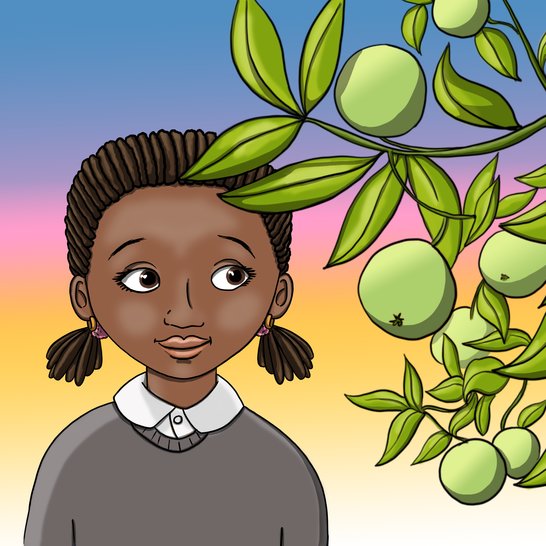
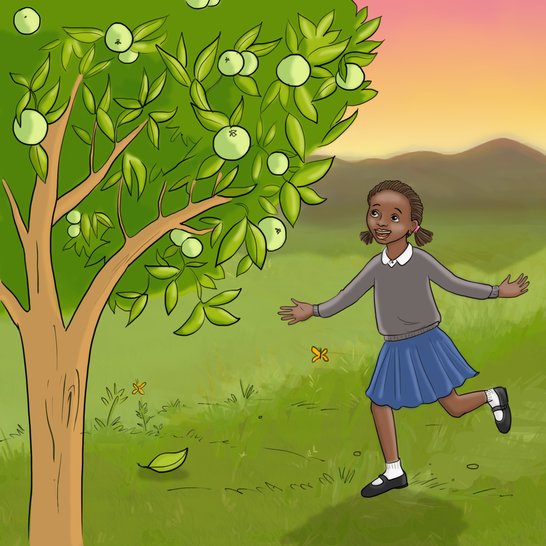
Lapho uKhalai ebuya esikoleni uvakashela isihlahla samawolintshi. “Asevuthiwe kodwa amawolintshi akho?” kubuza uKhalai.
When Khalai returns home from school, she visits the orange tree. “Are your oranges ripe yet?” asks Khalai.
Quand Khalai retourne chez elle de l’école, elle visite l’oranger. « Est-ce que tes oranges sont mûres ? » demande Khalai.
“Amawolintshi aseluhlaza,” uKhalai edonsa umoya.” Ngiyokubona kusasa sihlahla samawolintshi,” kusho uKhalai. “Mhlawumbe uzobe usunalo iwolintshi lami elivuthiwe!”
“The oranges are still green,” sighs Khalai. “I will see you tomorrow orange tree,” says Khalai. “Perhaps then you will have a ripe orange for me!”
« Les oranges sont encore vertes, » soupire Khalai. « Je te verrai demain oranger, » dit Khalai. « Peut-être que demain tu auras une orange mûre pour moi ! »
Written by: Ursula NafulaIllustrated by: Jesse PietersenTranslated by: Margaret Nokuthula ZondiRead by: Beauty NgwenyaLanguage: Zulu