Download PDF
Back to stories list

Kana Kambongolo Donkey Child L'enfant-âne

Written by Lindiwe Matshikiza

Illustrated by Meghan Judge

Translated by Chester Mwanza

Language ChiTonga

Level Level 3

Narrate full story The audio for this story is currently not available.


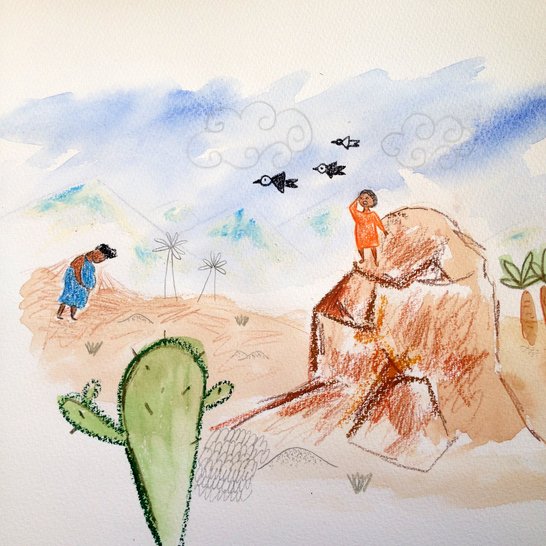
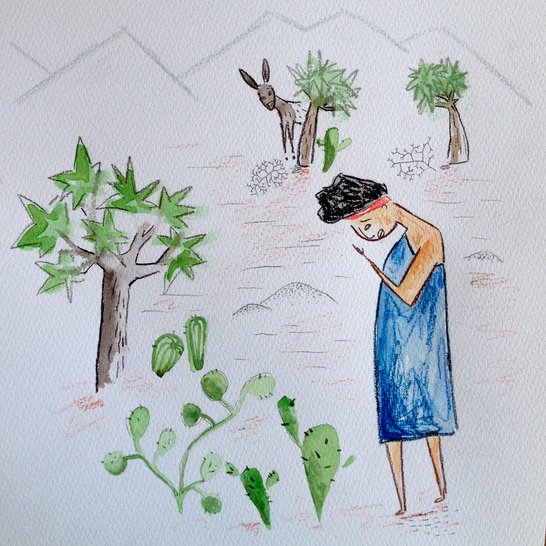
Kakali kasimbi kasyoonto kakasaanguna kubona cintu cakali kunyandya kumbele lyabo.

It was a little girl who first saw the mysterious shape in the distance.

Une petite fille fut la première à voir la forme mystérieuse au loin.


Mbocakali kuyaa buswena afwaafwi, bakabona kuti wakali mukaintu wakalaa da likinkide.

As the shape moved closer, she saw that it was a heavily pregnant woman.

Tandis que la forme se rapprocha, la petite fille vit que c’était une femme enceinte de plusieurs mois.


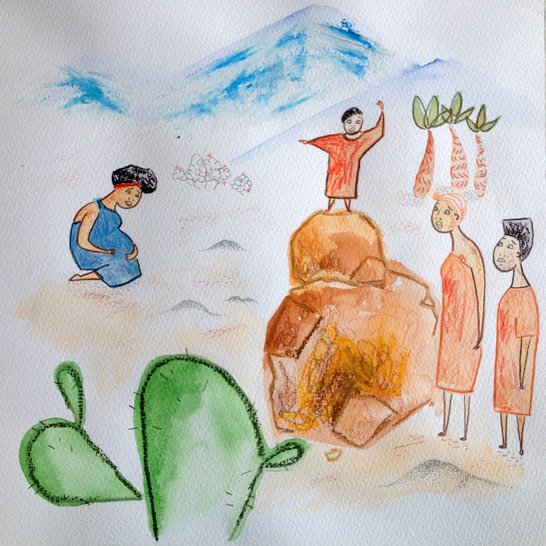
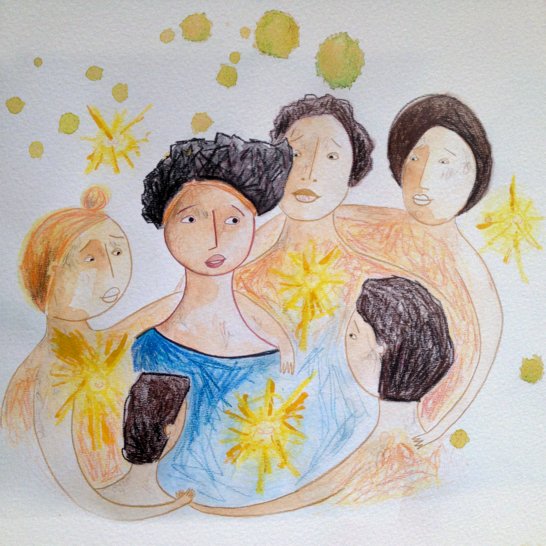
Aaka kana kasimbi, ansoni hyakwe pele icakutayoowa, kakaswena munsi-munsi amukaintu. “Tweelede kubagwasya akubabamba andiswe.” Eelyo bantu boonse bakazumina. “Tulababamba amwanaabo.”

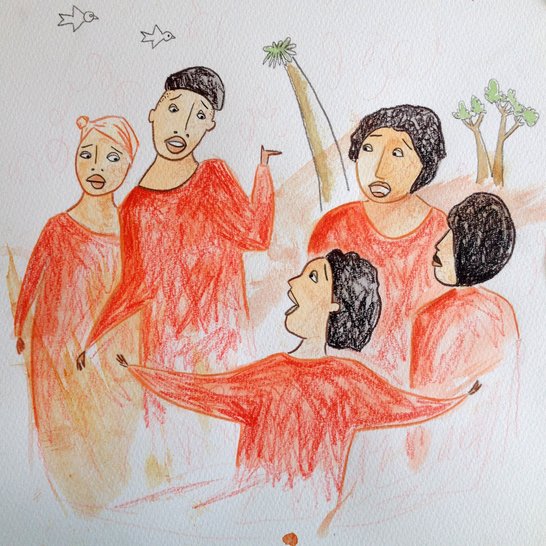
Shy but brave, the little girl moved nearer to the woman. “We must keep her with us,” the little girl’s people decided. “We’ll keep her and her child safe.”

Timide mais brave, la petite fille se rapprocha de la femme. « Nous devons la garder avec nous, » dit le peuple de la petite fille. « Nous la garderons en sécurité, ainsi que son enfant. »


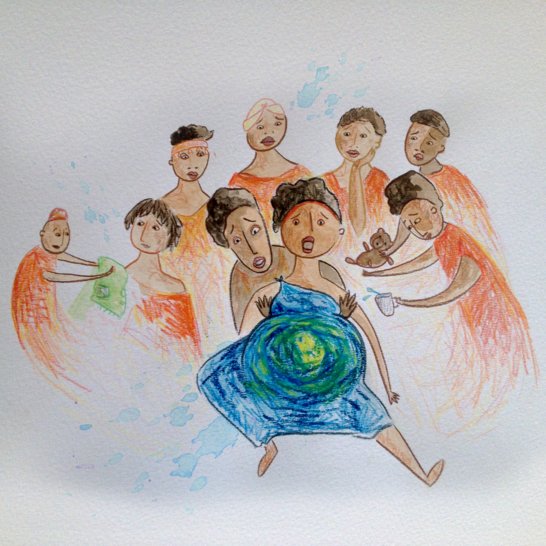
Mwana wakali munzila kuti atumbukwe. “Tonka!” “Kamuleta mapayi.” “Amulete meenda.” “Tooonkaaaaa!”

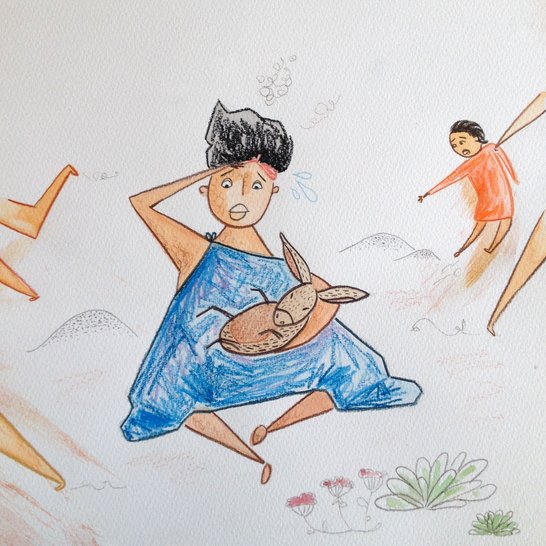
The child was soon on its way. “Push!” “Bring blankets!” “Water!” “Puuuuussssshhh!!!”

L’enfant arriva bientôt. « Pousse ! » « Apportez des couvertures ! » « De l’eau ! » « Pouuusseeee ! »


Nibakamubona mwana, boonse bakasotokela munsi akunyandwa kapati. “Imbongolo?”

But when they saw the baby, everyone jumped back in shock. “A donkey?!”

Mais quand ils virent le bébé, tous firent un saut en arrière. « Un âne ?! »


Boonse bakatalika kukazyanya. “Twaamba kuti tulababamba banyina amwana, aboobo mbotuticite oobo.” Bamwi bakaamba, “Kuti tubabambe, balatuletela malweza.”

Everyone began to argue. “We said we would keep mother and child safe, and that’s what we’ll do,” said some. “But they will bring us bad luck!” said others.

Tout le monde commença à se disputer. « Nous avions dit que nous garderions mère et enfant en sécurité et c’est ce que nous ferons, » dirent quelques-uns. « Mais ils vont nous porter malchance ! » dirent d’autres.


Mukaintu wakalijana alikke alimwi. Wakakatazyigwa cakucita kumwana ooyu waandeene. Wakabula cakucita mukamwini.

And so the woman found herself alone again. She wondered what to do with this awkward child. She wondered what to do with herself.

Ainsi, la femme se retrouva seule encore une fois. Elle se demanda quoi faire de cet enfant embarrassant. Elle se demanda quoi faire d’elle-même.


Limwi wakazumina kuti mwana wakwe amana mwana wakwe nimbongolo mpemunya wakali banyina mbongolo.

But finally she had to accept that he was her child and she was his mother.

Mais elle dut finalement accepter qu’il était son enfant et qu’elle était sa mère.


Niyatakali kukomena mbongolo, nicakali kabotu. Pesi Mbongolo eyi yakakomena limwi yakatalika kukatazya kubbala kumusana wabanyina. Mbongolo yakasola pesi tiiyakacikonzya kupona mbuli muntu. Banyina bakali kukatala kapati. Ciindi coonse bakali kujanika balinyemede. Zyimwi zyiindi bakali kumupa mulimo wabanyama.

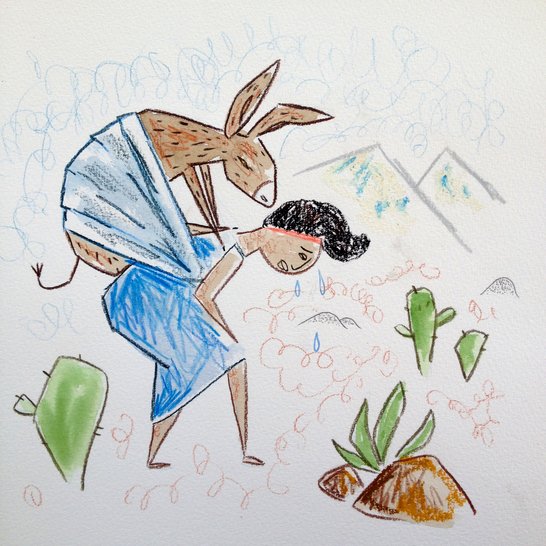
Now, if the child had stayed that same, small size, everything might have been different. But the donkey child grew and grew until he could no longer fit on his mother’s back. And no matter how hard he tried, he could not behave like a human being. His mother was often tired and frustrated. Sometimes she made him do work meant for animals.

Maintenant, si l’enfant était resté petit, tout aurait été différent. Mais l’enfant-âne grandit et grandit jusqu’à ce qu’il ne puisse plus être porté sur le dos de sa mère. Et malgré ses plus grands efforts, il ne pouvait pas se comporter comme un être humain. Sa mère était très souvent fatiguée et frustrée. Parfois elle l’obligeait à faire du travail destiné aux animaux.


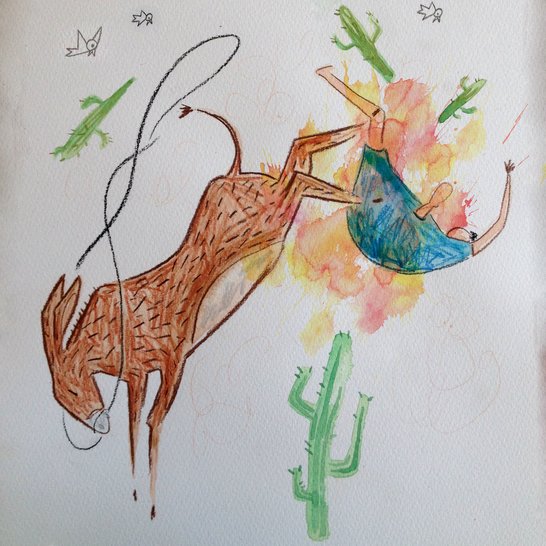
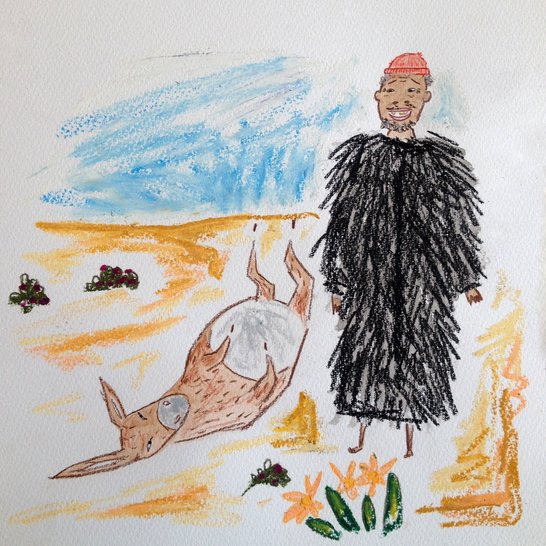
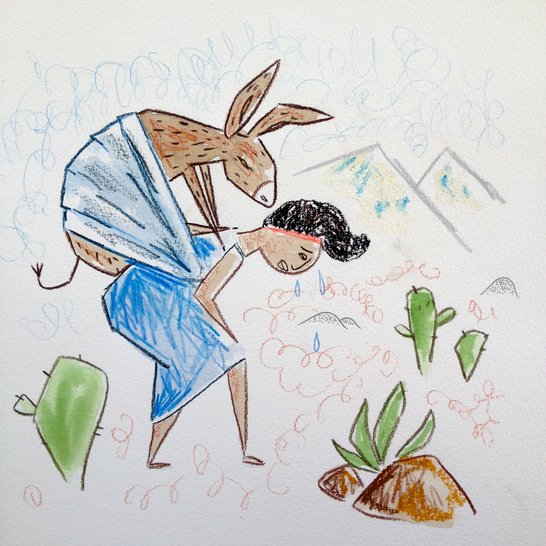
Mbongolo yakanyongana akunyema kapati. Yakanyema kapati akaambo kakuti tiiyakaangulukide kuti inga yakonhya kucita zimwi zintu nhyoyakali kuyanda kuchita. Bumwi buzuba, kunyema kwakaindilila, yakababbakela banyina mane bawa ansi.

Confusion and anger built up inside Donkey. He couldn’t do this and he couldn’t do that. He couldn’t be like this and he couldn’t be like that. He became so angry that, one day, he kicked his mother to the ground.

La confusion et la colère s’accumulèrent à l’intérieur d’Âne. Il ne pouvait pas faire ceci et il ne pouvait pas faire cela. Il ne pouvait pas être comme ceci et il ne pouvait pas être comme cela. Il devint tellement fâché qu’un jour il botta sa mère par terre.


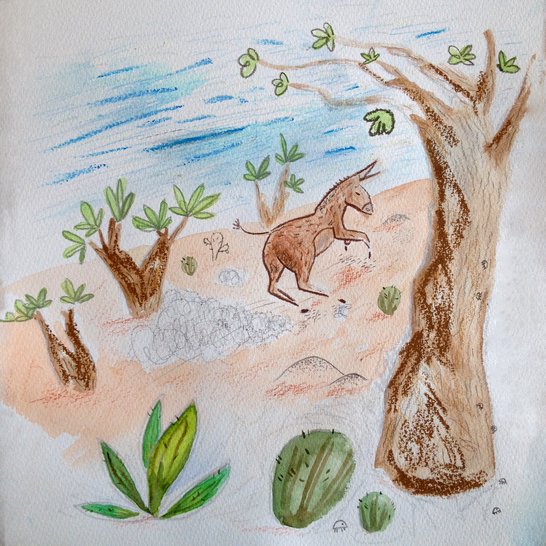
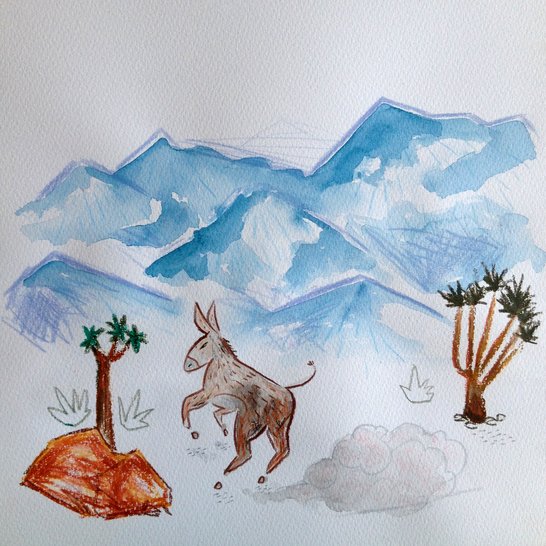
Mbongolo yakafwa nsoni. Yakatalika kulunduka kutija kuya kule.

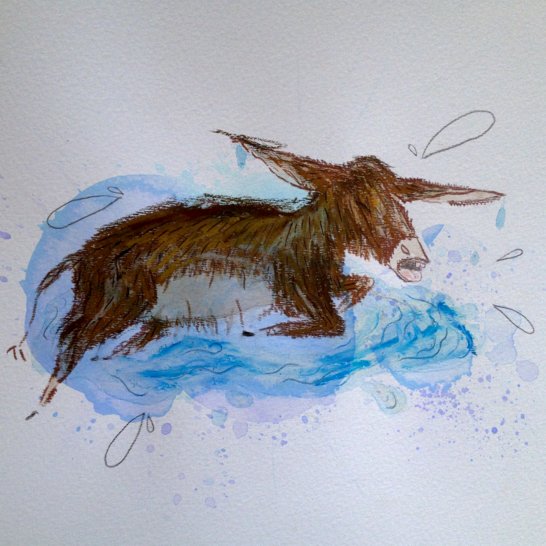
Donkey was filled with shame. He started to run away as far and fast as he could.

Âne fut rempli de honte. Il commença à se sauver aussi vite et aussi loin qu’il pu.


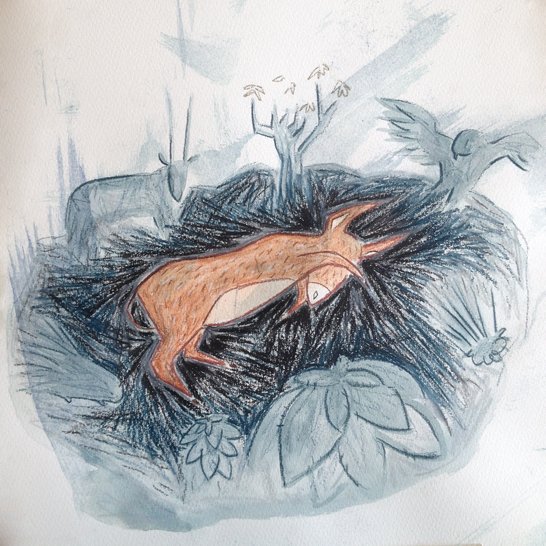
Niyakaleka kulunduka mbongolo, akali masiku, imongolo yakasweka. “Hii, hoo.” Yakang’utauhya mumudima. “Hiii hooo?” yakaongolola. Yakali iilikke mbongolo. Yakalivwunga akoona. Yakoona pele yakalipengede mumoyo maningi.

By the time he stopped running, it was night, and Donkey was lost. “Hee haw?” he whispered to the darkness. “Hee Haw?” it echoed back. He was alone. Curling himself into a tight ball, he fell into a deep and troubled sleep.

Quand il s’arrêta de courir, la nuit était tombée et Âne était perdu. « Hi han ? » il chuchota à la noirceur. « Hi han ? » retourna la noirceur en écho. Il était seul. Se lovant en petite boule, il tomba dans un sommeil profond et agité.


Niyakabuka Mbongolo, yakajana kadaala kaiimvwi munsi munsi kakamulanga. Imbongolo yakamulanga kumeso mudaala, akubona bulangizi.

Donkey woke up to find a strange old man staring down at him. He looked into the old man’s eyes and started to feel a twinkle of hope.

Âne se réveilla et vit un vieil homme étrange qui le regardait. Il regarda dans les yeux du vieil homme et commença à ressentir un brin d’espoir.


Imbongolo yakaunka kukukkala amudaala ooyu. Mudaala wakayiisya Mbongolo Ibupone. Mbongolo yakamvwa alimwi akwiiya. Bakali kugwasyanya kubeleka akuseka antoomwe.

Donkey went to stay with the old man, who taught him many different ways to survive. Donkey listened and learned, and so did the old man. They helped each other, and they laughed together.

Âne partit vivre avec le vieil homme, qui lui montra plusieurs façons de survivre. Âne écouta et apprit, et le vieil homme aussi. Ils s’aidèrent l’un l’autre et ils rirent ensemble.


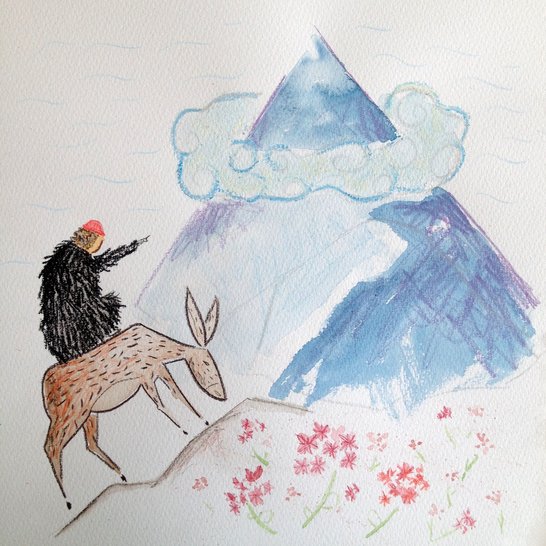
Bumwi buzuba, mudaala wakalomba Mbongolo kuti imubbale akumutola kumulundu.

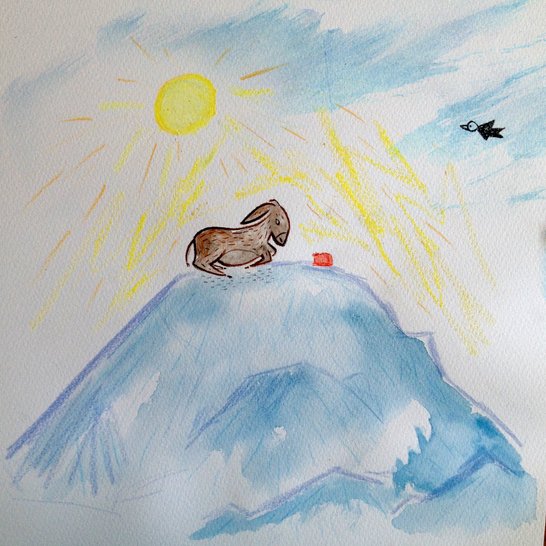
One morning, the old man asked Donkey to carry him to the top of a mountain.

Un matin, le vieil homme demanda à Âne de le transporter jusqu’au sommet d’une montagne.


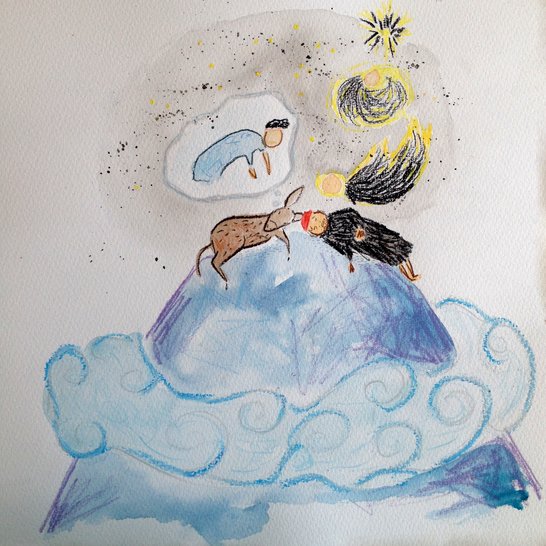
Nibakasika atala akati kamakumbi, mudaala ambongolo bakoona. Mbongolo yakalota kuti banyina baciswa mpoona bakali kumwiita kuyanda lugwasyo. Naakabuka…

High up amongst the clouds they fell asleep. Donkey dreamed that his mother was sick and calling to him. And when he woke up…

En haut, parmi les nuages, ils s’endormirent. Âne rêva que sa mère était malade et qu’elle l’appelait. Et quand il se réveilla…


… wakajana makumbi azimaana antoomwe amwenzyinyina, mudaala.

… the clouds had disappeared along with his friend, the old man.

… les nuages avaient disparu avec son ami le vieil homme.


Mbongolo yakacizyiba cakucita.

Donkey finally knew what to do.

Âne sut finalement quoi faire.


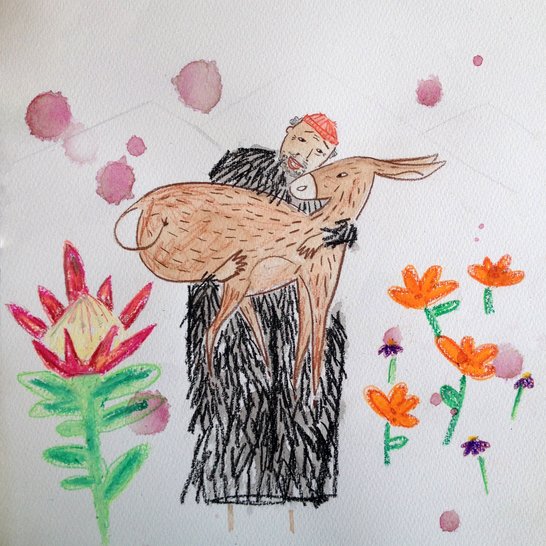
Mbongolo yakajana banyina kabali balikke kabalila mwana wabo wakasweeka. Bakalangana kwaciindi cilamfwu. Nibakamana, bakakumbatana canguzu.

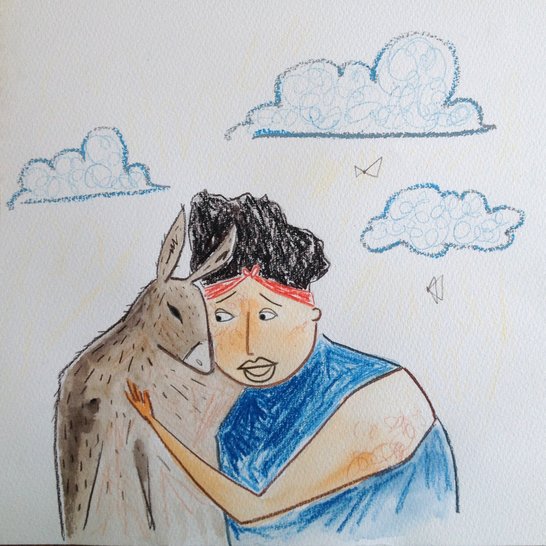
Donkey found his mother, alone and mourning her lost child. They stared at each other for a long time. And then hugged each other very hard.

Âne trouva sa mère, seule et en deuil pour son enfant perdu. Ils se regardèrent longtemps. Puis ils s’embrassèrent très fort.


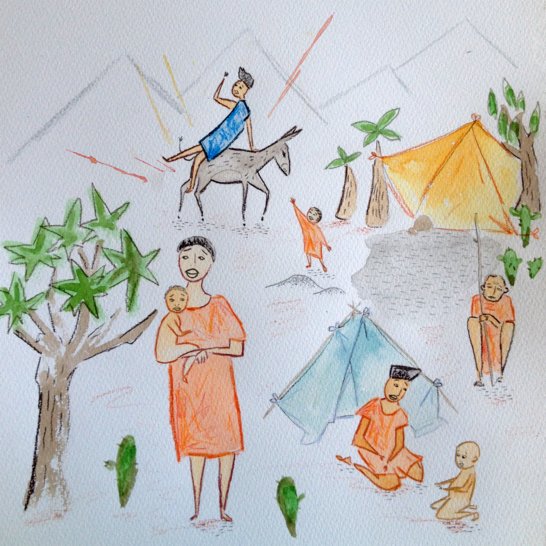
Mbongolo abanyina bakomena antoomwe, bakajana nzila yakupona antoomwe. Asyoonto- syoonto bantu bakatalika kuyaka maanda munsi-munsi lyabo akukkala antoomwe.

The donkey child and his mother have grown together and found many ways of living side by side. Slowly, all around them, other families have started to settle.

L’enfant-âne et sa mère ont grandi ensemble et ils ont trouvé plusieurs manières de coexister. Lentement, tout autour d’eux, d’autres familles ont commencé à s’installer.

Written by: Lindiwe Matshikiza
Illustrated by: Meghan Judge
Translated by: Chester Mwanza
Language: ChiTonga
Level: Level 3
Source: Donkey Child from African Storybook
Creative Commons License
This work is licensed under a Creative Commons Attribution 4.0 International License.
Options
Back to stories list Download PDF